
Emergency
What to Do in the First 24 Hours After Hurricane Roof Damage in Boca Raton
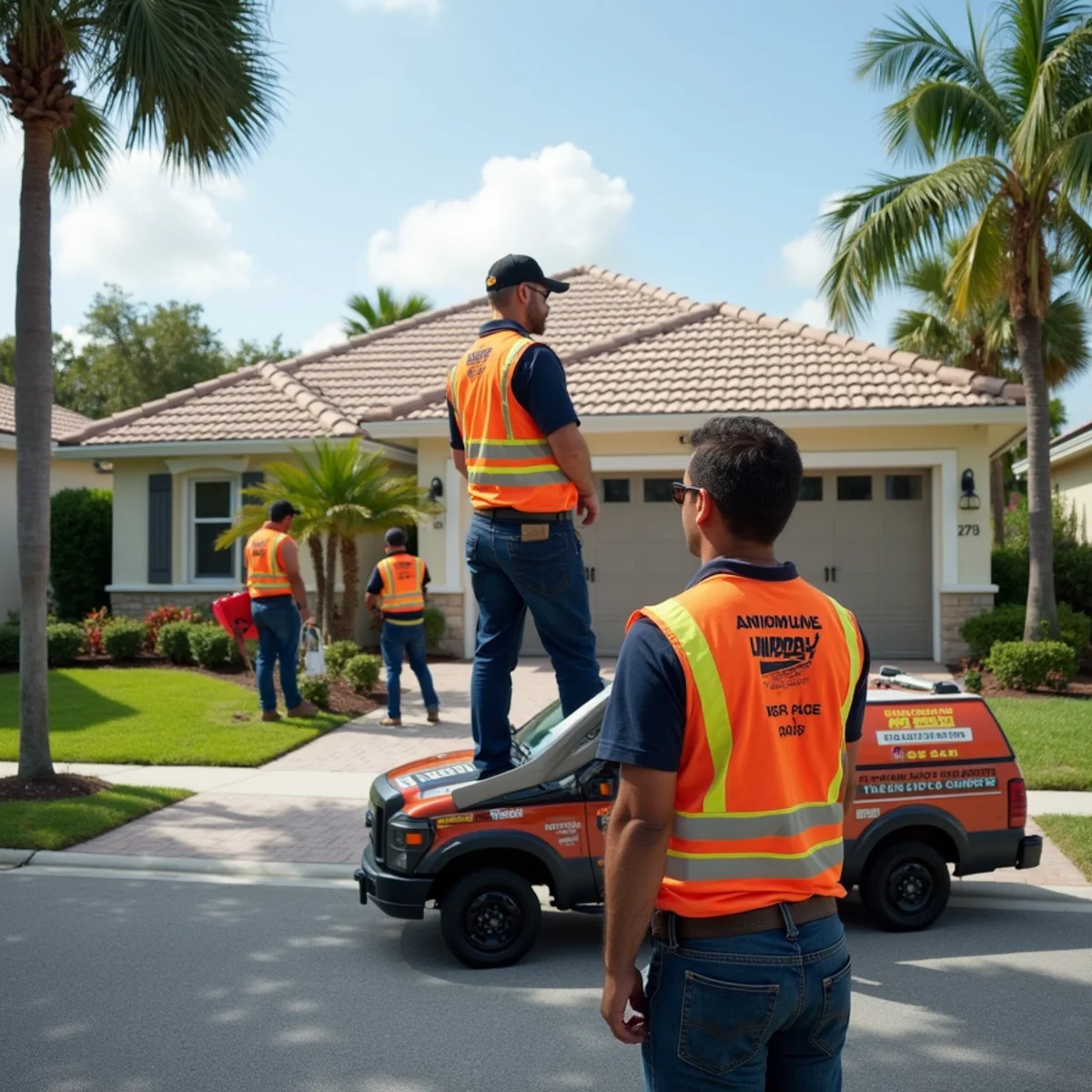
The hours right after a hurricane passes decide how smoothly your claim and repair go. Here is the exact order of operations our crews recommend to Boca Raton homeowners the morning after.
The wind has died down, the power may still be out, and there is a hole in your roof or a scatter of broken tile in the yard. What you do in the next 24 hours in Boca Raton matters almost as much for your insurance claim as it does for your roof. We have walked hundreds of Palm Beach County homeowners through this exact morning, and the order of operations below is what keeps a bad day from turning into a denied claim or a mold problem three weeks later.
Step 1: Confirm it is safe before you go near the roof
Downed power lines, live wires tangled in fallen branches, and unstable roof sections kill and injure people every hurricane season. Stay off the roof entirely. Walk the exterior from the ground, keep well clear of any line touching the house or a fence, and photograph what you can see from a safe distance. If you smell gas or see sparking, leave the property and call the utility company before calling anyone else.
Step 2: Document everything before you touch anything
Insurers and adjusters rely heavily on early photo and video evidence. Walk the full perimeter and take wide shots of each elevation, then closer shots of any lifted tile, exposed underlayment, torn shingles, damaged flashing, or debris impact. Photograph interior ceiling stains, ceiling sag, and any water actively coming through. Note the date and approximate time in your phone; most phones already timestamp this automatically in the photo metadata.
- Wide exterior shots of every roof slope and elevation
- Close-up shots of cracked, lifted, or missing tile and shingles
- Photos of gutters, flashing, and any visible decking
- Interior ceiling and wall photos for every affected room
- A short video walkthrough narrating what you see
Step 3: Stop the water — your policy requires it
Florida property insurance policies include a mitigation duty: you are contractually required to take reasonable steps to prevent further damage once the initial event has occurred. That does not mean climbing onto a wet, wind-damaged roof yourself. It means calling a licensed contractor promptly for emergency hurricane roof damage repair and temporary tarping, and moving indoor furniture, electronics, and belongings away from active leaks. Keep receipts for any buckets, tarps, or fans you buy yourself — those are reimbursable mitigation expenses.
For the full mitigation-duty rules and what a professional tarp job should include, see our guide to emergency roof tarping as an insurance obligation.
Step 4: Call your roofer before, or at the same time as, your insurer
There is no rule that says you must wait for an adjuster before calling a contractor. In fact, waiting usually costs you time when tarping crews and materials are in high demand across Palm Beach County. We prioritize active leaks and structural damage, get a tarp on the vulnerable area, and provide a written, dated damage assessment with photos that you can hand directly to your insurance company.
Step 5: File the claim and start the paper trail
Report the claim to your carrier as soon as reasonably possible; most Florida policies set specific notice deadlines and delay can be used against you. Write down the claim number, the adjuster's name and direct contact information, and the date of every call. Keep a simple log — a notes app entry works fine — of every conversation, what was promised, and what was said about scheduling.
What not to do
- Do not sign an assignment of benefits or a contract you have not read completely
- Do not let anyone permanently repair or replace the roof before the adjuster has documented the damage, unless a tarp or temporary dry-in is genuinely urgent
- Do not throw away damaged materials until your adjuster has seen them or told you it is fine to discard them
- Do not delay drying out wet interior materials — mold risk climbs fast after 24 to 48 hours
How we handle the first call
When a Boca Raton or Highland Beach homeowner calls us after a storm, we ask a few quick questions to triage severity, then get a crew moving toward active leaks first. Every tarp job includes dated photos before and after, and we provide a written scope that separates emergency mitigation from the eventual permanent repair or replacement, so your insurer sees a clean, professional record rather than a vague invoice.
What a licensed roofer checks that a ground-level look will miss
A homeowner walking the yard sees broken tile and an obvious hole. A licensed roofer climbing a ladder — once conditions are safe — checks things that determine whether your claim covers a patch or a full section replacement. We probe the exposed decking with a moisture meter to see how far water has already tracked sideways under adjacent tile, because wet plywood spreads laterally long before a stain shows up on your ceiling. We also check the fastener pattern on tile and shingle at the edge of the damaged area, since Boca Raton's roughly 170 mph design-wind reference under Exposure C means the original installer should have used a tighter nailing or fastening schedule near ridges, hips, and rakes, and a storm often finds the weakest fastener first.
We also check whether the secondary water barrier, if the roof has one, is still doing its job under the compromised area, and we look at soffit and gable-end vents for wind-driven rain intrusion that has nothing to do with the visible hole. A roof can leak from an intact-looking section simply because wind forced rain sideways through a vent opening. None of this changes what you do in the first 24 hours — get safe, document, stop the water — but it explains why we recommend a professional assessment, ideally paired with a free drone roof inspection, before anyone commits to a repair scope based on a look from the driveway.
Boca Raton's mixed housing stock changes what we expect to find
Boca Raton spans decades of construction, from 1960s and 1970s homes west of Federal Highway with older, thinner roof decking to newer construction closer to the Intracoastal built to more recent wind-uplift standards. On an older home, we go in expecting to find under-nailed sheathing or brittle felt underlayment that tears the moment a tile lifts, which is why the first 24 hours matter even more there: a small opening on an old deck can become a large one after just a few hours of driving rain. On newer construction, the sealed roof deck and modern fastening pattern often mean the damage stays more contained, but we still verify rather than assume, because product age and installation quality vary even within the same subdivision.
| Hours after the storm | Priority action |
|---|---|
| 0–2 hours | Confirm safety, stay off the roof, photograph from the ground |
| 2–6 hours | Call for emergency roof tarping or temporary dry-in once access is safe |
| 6–24 hours | Report the claim, move wet contents, start drying interior spaces |
| Within 24–48 hours | Get a written damage scope from a licensed contractor before major decisions |
If you need a fast, professional response, our emergency roof repair team works the same triage process on every storm call across Boca Raton, prioritizing active leaks and structural exposure first.
If your roof took a direct hit this season, call (831) 666-1600. We can usually get someone assessing the damage and tarping vulnerable sections within hours, not days, across our Boca Raton service area.
Frequently asked questions
Talk to a licensed Boca Raton roofer
Get a free drone inspection and a written estimate from Boca Raton's trusted, licensed roofing team. Same-day response, no pressure.
Keep reading
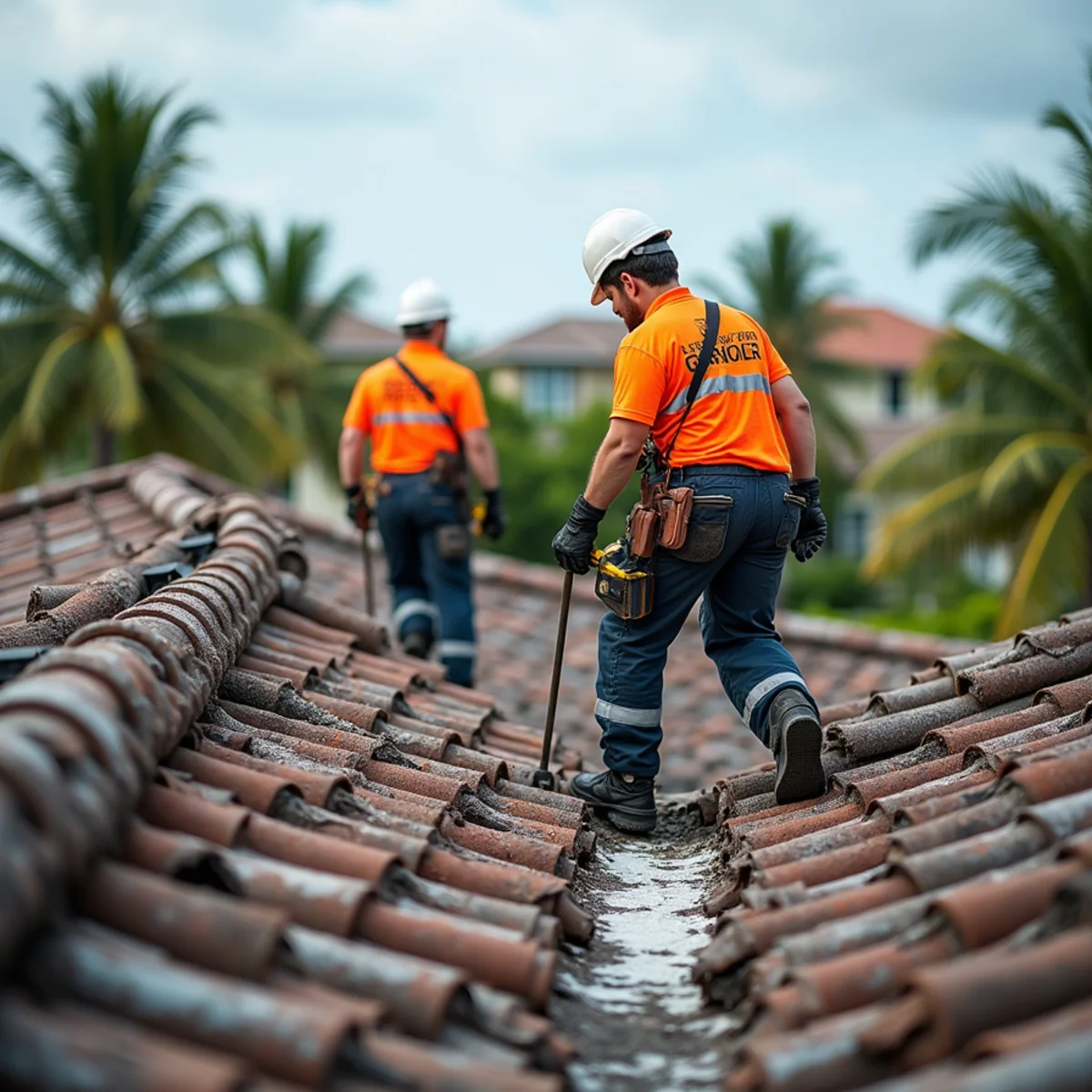
Tile Roof Leaking After a Storm? 6 Common Failure Points in South Florida
A leaking tile roof after a storm is almost never the tile itself. Here are the six failure points we find most often across Delray Beach, Coral Springs, and the rest of South Florida.
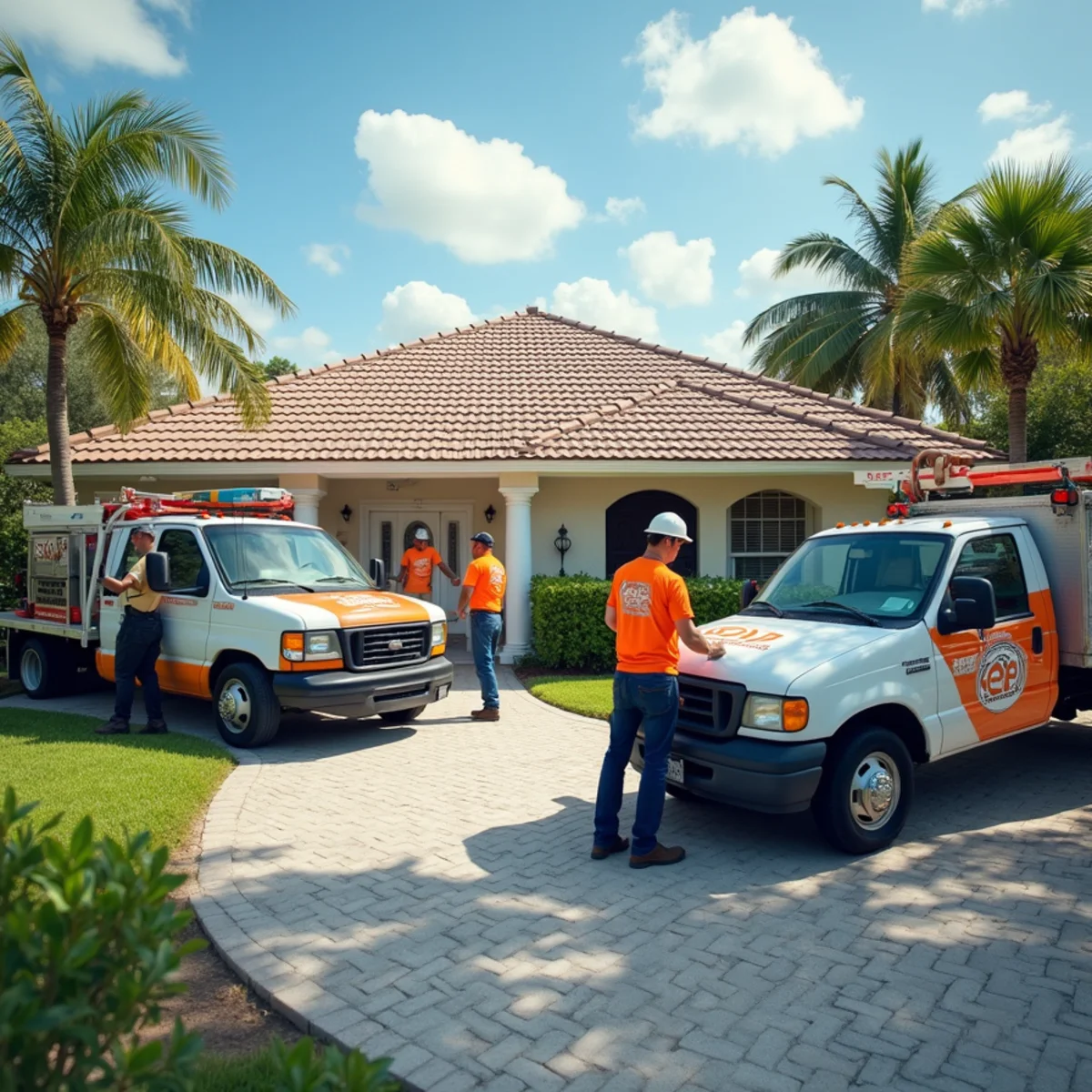
Emergency Roof Tarping in Palm Beach & Broward: Your Insurance Mitigation Duty Explained
Most Florida homeowners have never heard the term 'mitigation duty' until they need a tarp on their roof. Here is what your policy actually requires, and what a professional tarp job looks like.