
Emergency
Emergency Roof Tarping in Palm Beach & Broward: Your Insurance Mitigation Duty Explained
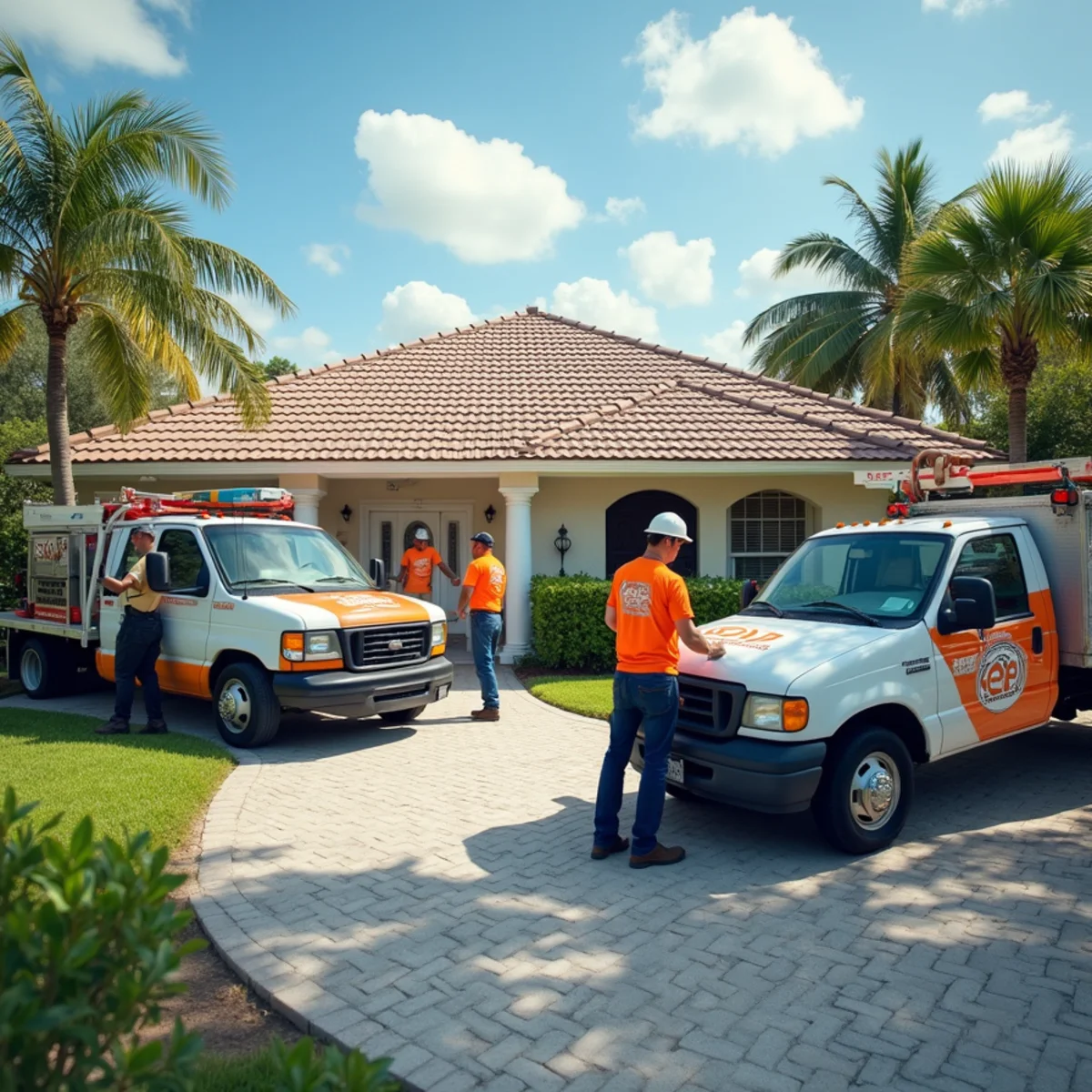
Most Florida homeowners have never heard the term 'mitigation duty' until they need a tarp on their roof. Here is what your policy actually requires, and what a professional tarp job looks like.
Buried in nearly every Florida homeowners policy is a clause that most people never read until they need it: the duty to protect property from further damage after a covered loss. After a storm rips tile loose or tears a section of shingle away, that clause is the reason your insurer expects to see a tarp on your roof within a reasonable window, not weeks later when the interior ceiling has already collapsed.
What the mitigation duty actually says
Standard policy language requires the insured to take reasonable and necessary steps to protect the property from further damage after a loss, and it typically states the insurer will pay reasonable costs for that mitigation. In plain terms: once wind or debris opens your roof to the weather, you are expected to act, and you are entitled to be reimbursed for doing so. Ignoring the damage and letting rain repeatedly soak the same ceiling can give an insurer grounds to reduce or dispute a claim for damage that mitigation would have prevented.
Not sure whether your damage needs a tarp or a full emergency roof tarping service versus a simple patch? A licensed inspection is the fastest way to know before the next rain event.
What a professional tarp job includes
A properly installed emergency tarp is not a blue sheet weighted down with a few cinder blocks. It should be secured with wood battens screwed through the tarp into structural framing, not just nailed into tile or shingle, and it needs to extend well past the damaged area and tuck under adjacent courses so wind cannot get underneath and peel it off during the next squall.
| Element | Why it matters |
|---|---|
| Battens screwed into framing | Prevents the tarp from lifting or tearing loose in follow-on wind events |
| Overlap past damaged area | Stops water from tracking sideways under the tarp edge |
| Photo documentation before/after | Gives your adjuster a clean, dated mitigation record |
| Written scope of temporary work | Separates emergency mitigation cost from the eventual permanent repair |
Palm Beach and Broward: two different code environments
Tarping itself does not change based on county lines, but the permanent repair that follows often does. Cross south over the Hillsboro Canal into Deerfield Beach and the rest of Broward County, and you are in the High-Velocity Hurricane Zone, where replacement materials need Miami-Dade NOA or Florida Product Approval documentation and TAS-tested components. We tarp the same way on both sides of the line, but we scope the permanent repair differently depending on which building department has jurisdiction.
Documenting the tarp for your claim
- Get a dated invoice or work order, even for a same-day emergency call
- Ask for before-and-after photos from the contractor, not just your own
- Keep the tarp in place until the adjuster has inspected or your carrier confirms it is fine to remove
- Note how many days elapsed between the storm and the tarp installation
If you keep this simple paper trail, most adjusters treat the tarping line item as a routine, approvable mitigation expense rather than something to argue about.
When a tarp is not enough
Large sections of missing tile, a hole exposing the trusses, or persistent leaking around a chimney or skylight sometimes call for a full temporary dry-in with self-adhered underlayment rather than a simple tarp, especially if the permanent repair will be delayed by material lead times. We will tell you honestly which approach your roof needs rather than defaulting to whichever is easiest for us.
How we decide between a tarp and a full temporary dry-in
This is a judgment call we make on the roof, not from a phone description, and it comes down to how much of the deck is actually exposed versus how much is simply missing its covering. A tarp works well when the underlayment beneath the missing tile or shingle is still intact and the deck itself is dry — the tarp is really just protecting a vulnerable seam, not the deck itself. Once we find torn or missing underlayment over bare plywood, especially on a section larger than a few dozen square feet, a self-adhered temporary membrane laid directly on the deck seals better and holds up longer in wind than battens and a tarp edge ever will.
Roof pitch matters too. A steep tile roof sheds a tarp's water weight quickly, but it also gives wind more leverage to work under an edge, so we favor more aggressive batten spacing and, on the steepest sections, a dry-in membrane over a tarp whenever the schedule allows. On flatter sections common on additions and lanais, ponding water changes the calculation entirely, and a tarp alone rarely holds a watertight seal over standing water for more than a few days.
Common tarping mistakes that put a claim at risk
We get called to fix as many DIY and low-quality tarp jobs as we install from scratch. The pattern is consistent enough that it is worth naming plainly, since a failed tarp between storms can turn a covered claim into a coverage dispute over uninsured secondary damage.
- Weighting a tarp with cinder blocks instead of screwing battens into structural framing
- Stopping the tarp right at the edge of visible damage instead of overlapping several feet past it
- Skipping photo documentation of the tarp itself, leaving no proof it was installed properly or promptly
- Leaving a tarp in place for months without scheduling the permanent hurricane roof damage repair, which can itself raise questions during a later claim
If you are unsure whether a tarp your insurer paid for was actually installed to hold, it is worth a quick inspection before the next system moves through. A failed tarp discovered after a second storm complicates a roof insurance claim in ways a solid first tarp job avoids entirely.
During an active hurricane season, a single tarp sometimes has to hold through more than one named storm before the permanent repair can be scheduled, especially when material lead times stretch out. We check every active tarp job we have on the books before an approaching storm, re-securing battens and re-sealing edges as needed, rather than assuming a tarp installed six weeks earlier is still performing the way it did on day one. A tarp that survived a tropical storm can still have loosened fasteners or wind-fatigued material that would not hold through a stronger system, and catching that before landfall costs far less than the water damage that follows if it fails.
This is also why we keep a running list of every active tarp we have installed across Broward and Palm Beach counties during hurricane season, so a homeowner does not have to remember to call us back before the next storm. If your tarp was installed by another contractor and you are unsure of its condition, we will inspect it honestly rather than assume it needs full replacement just to generate more work.
Serving Boca Raton, Deerfield Beach, and the rest of Broward and Palm Beach counties, we respond to tarping calls the same day whenever conditions allow safe roof access. Call (831) 666-1600 for emergency tarping backed by the documentation your claim will need.
Frequently asked questions
Talk to a licensed Boca Raton roofer
Get a free drone inspection and a written estimate from Boca Raton's trusted, licensed roofing team. Same-day response, no pressure.
Keep reading
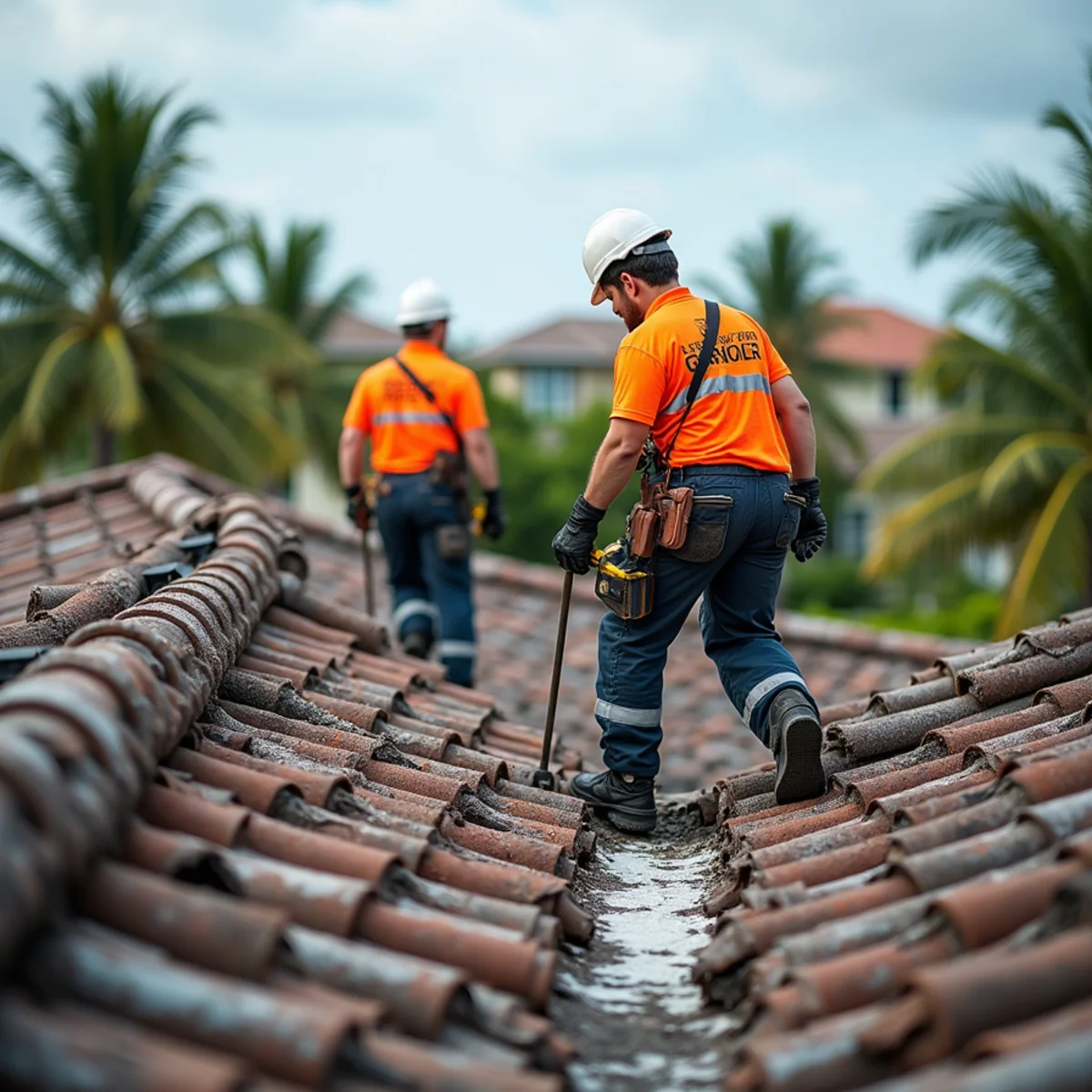
Tile Roof Leaking After a Storm? 6 Common Failure Points in South Florida
A leaking tile roof after a storm is almost never the tile itself. Here are the six failure points we find most often across Delray Beach, Coral Springs, and the rest of South Florida.
What to Do in the First 24 Hours After Hurricane Roof Damage in Boca Raton
The hours right after a hurricane passes decide how smoothly your claim and repair go. Here is the exact order of operations our crews recommend to Boca Raton homeowners the morning after.