
Emergency
Tile Roof Leaking After a Storm? 6 Common Failure Points in South Florida

A leaking tile roof after a storm is almost never the tile itself. Here are the six failure points we find most often across Delray Beach, Coral Springs, and the rest of South Florida.
Homeowners are often surprised when we tell them their tile is fine but their roof is still leaking. Tile is a covering, not the waterproofing layer — the underlayment beneath it does that job. After a storm shakes loose fasteners, cracks a few pieces, and drives wind-blown rain sideways under the edges, water usually finds its way in through one of the same six spots, no matter whether the home is in Delray Beach or Coral Springs.
1. Cracked or slipped tile exposing the underlayment
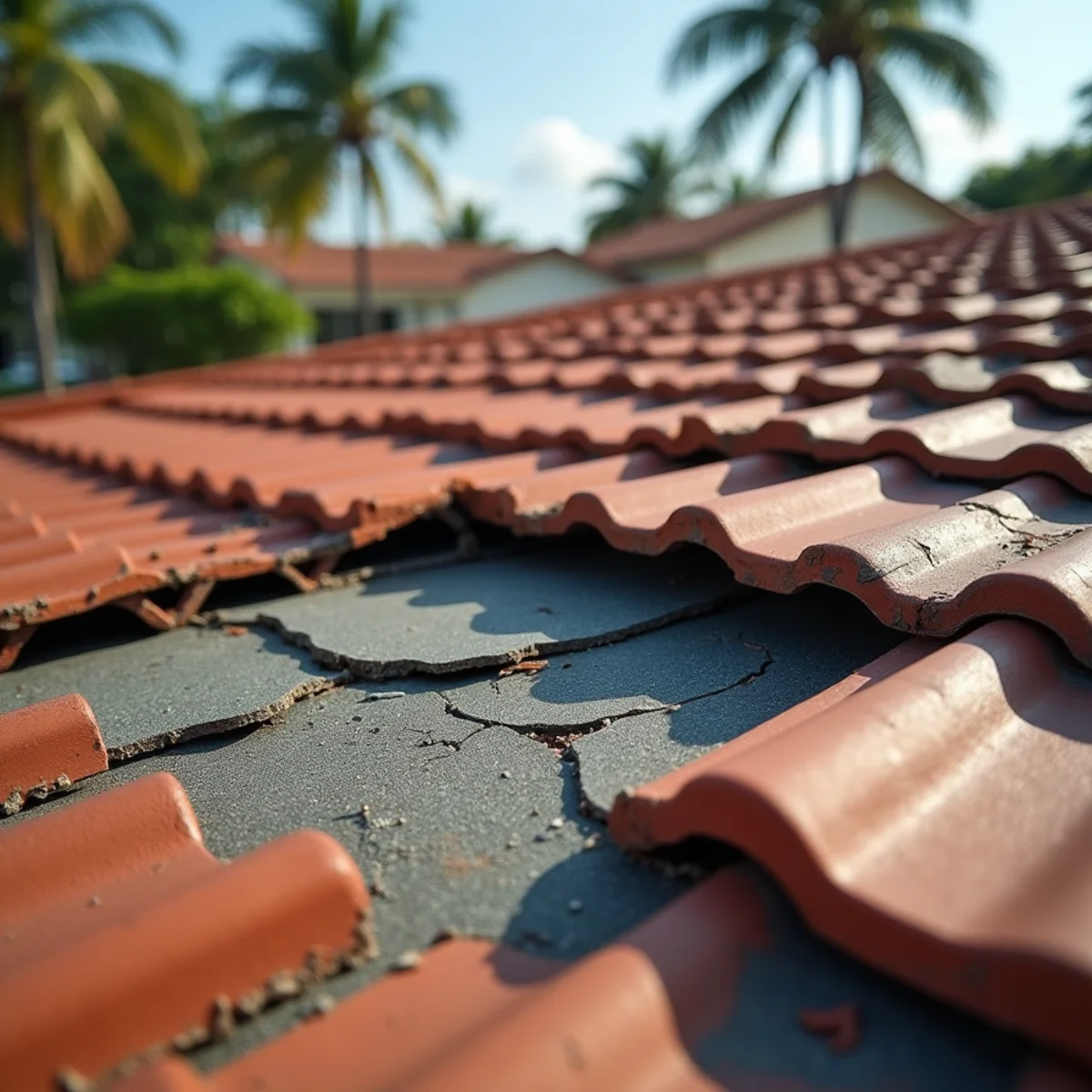
Wind uplift and wind-blown debris crack tile or shift it out of alignment. Once a tile is cracked or displaced, the underlayment beneath it is exposed directly to sun and water, and it degrades far faster than it would under an intact tile. A few missing pieces after a storm often mean days of unprotected underlayment before anyone notices.
2. Aged or storm-torn underlayment
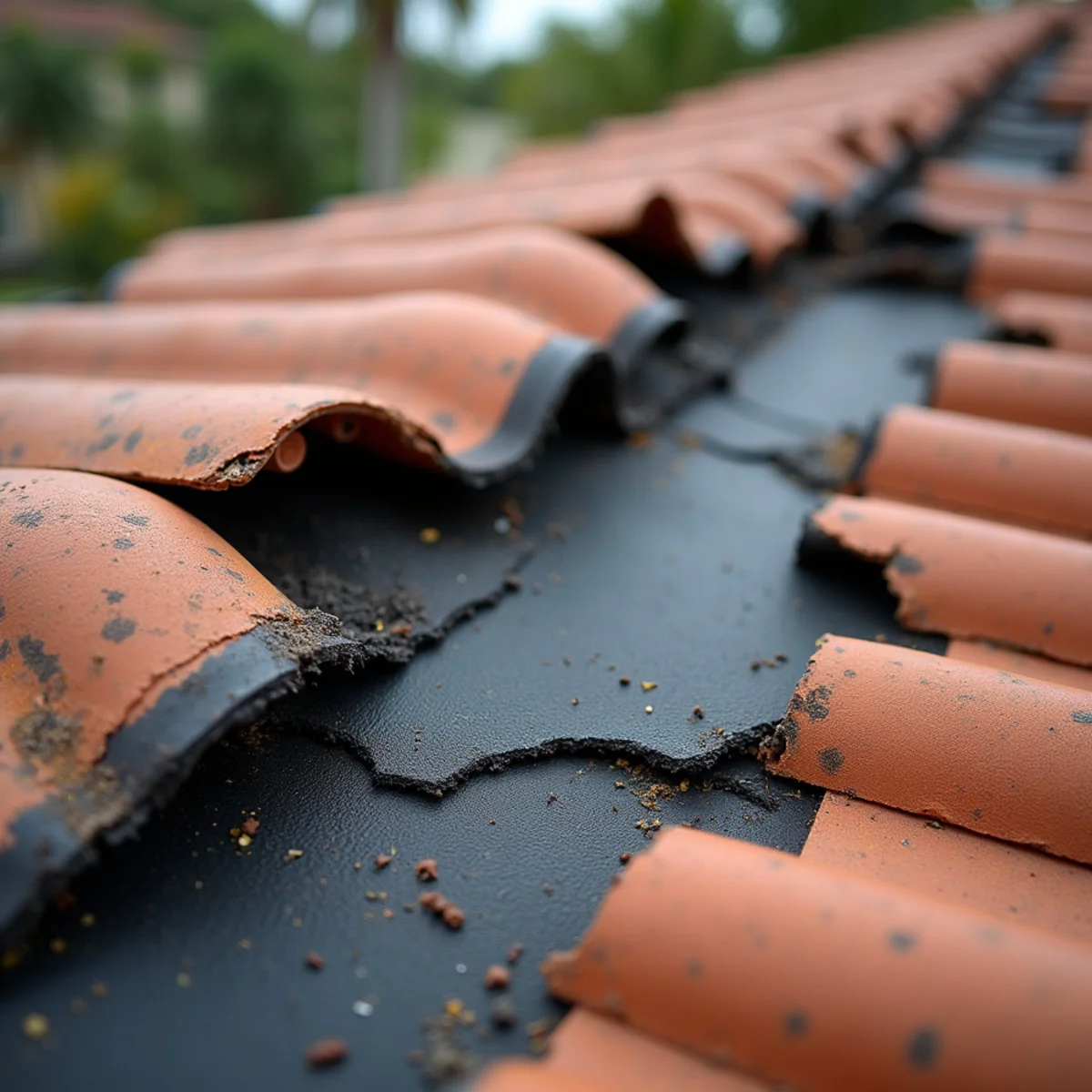
Older tile roofs, especially those from the 1990s and early 2000s, were often installed with 30-pound felt rather than today's self-adhered or synthetic underlayments. Felt becomes brittle with UV and heat cycling over 15 to 20 years, and it tears easily once wind gets under a cracked or lifted tile. This is the single most common failure point we find on storm calls.
3. Valley flashing and debris dams
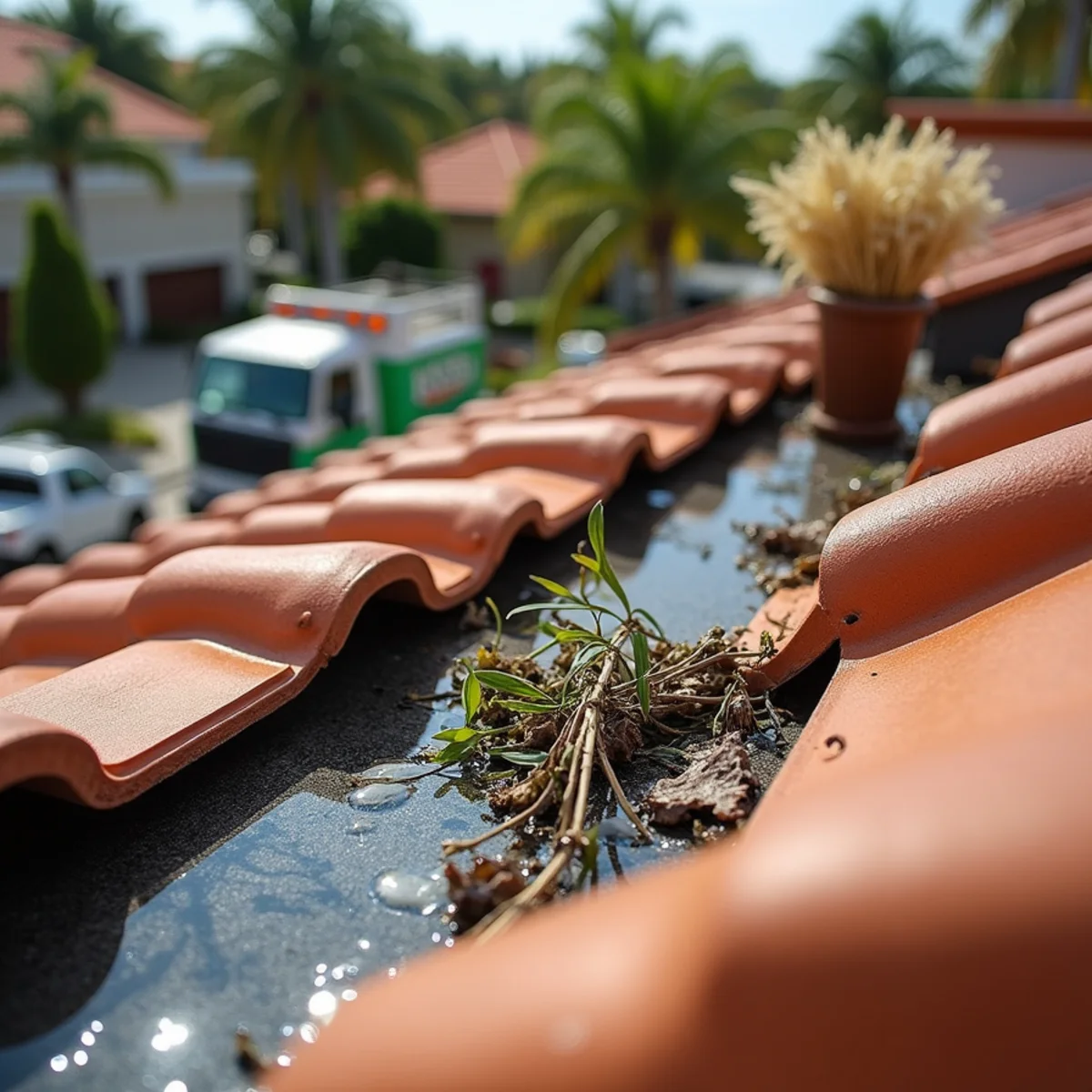
Roof valleys concentrate a huge volume of water during a downpour. Leaves, palm fronds, and broken tile fragments collect in valleys and dam the flow, forcing water up and under the flashing edges. We see this constantly after storms that drop heavy debris from oak and ficus canopies onto tile roofs.
4. Boot and pipe flashing failure
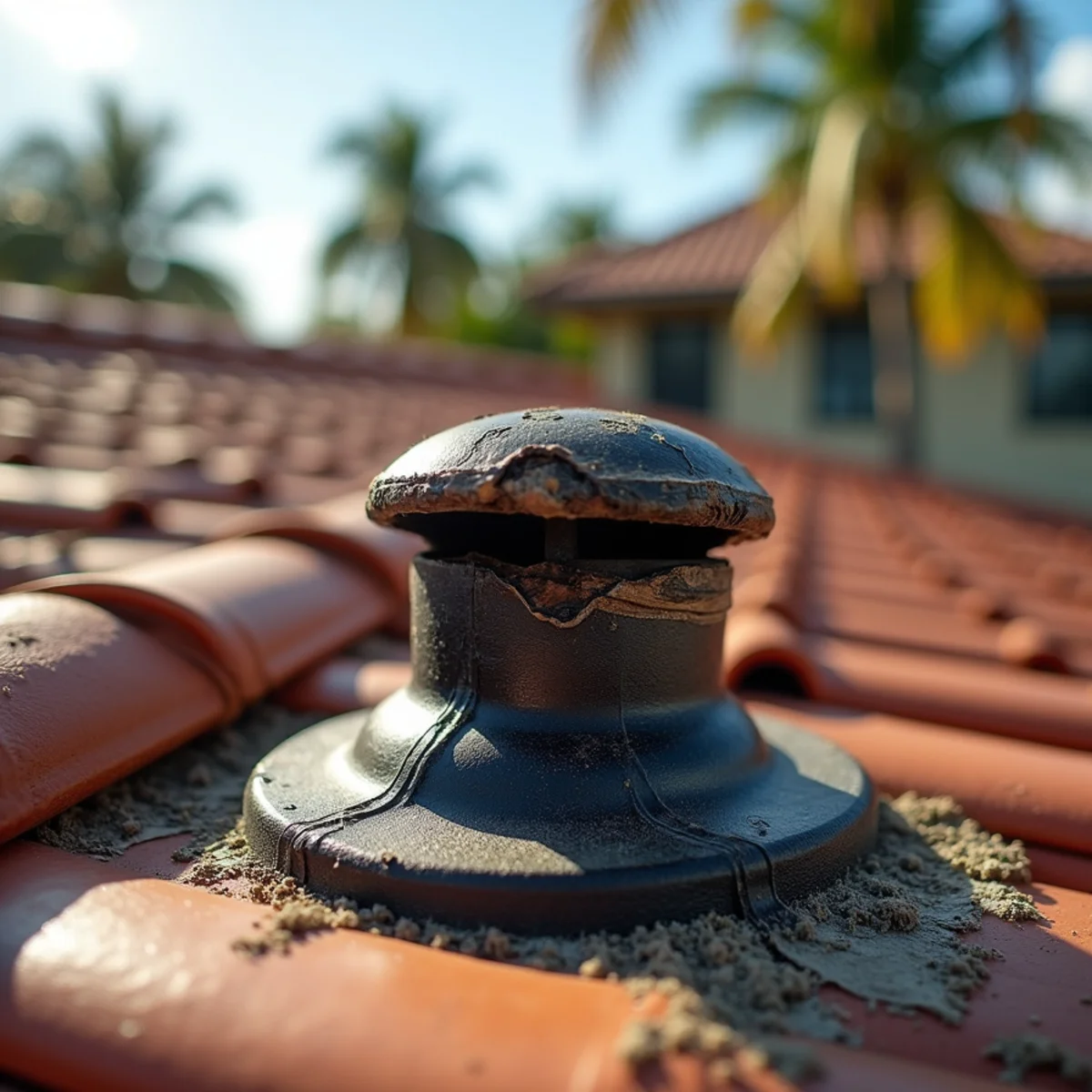
Rubber pipe boots around plumbing vents dry out and crack years before the surrounding roof needs attention, and wind can loosen the flashing collar entirely. A leak that appears near a bathroom or kitchen wall, rather than in a wide-open area, often traces back to a single failed boot.
5. Ridge and hip mortar or fastener failure
Ridge and hip tiles are set in mortar or mechanically fastened, and both methods loosen over time from thermal movement and wind loading. A storm can crack ridge mortar or work a hip tile loose without any tile appearing visibly broken from the ground, which is why ridge lines deserve close inspection after high wind.
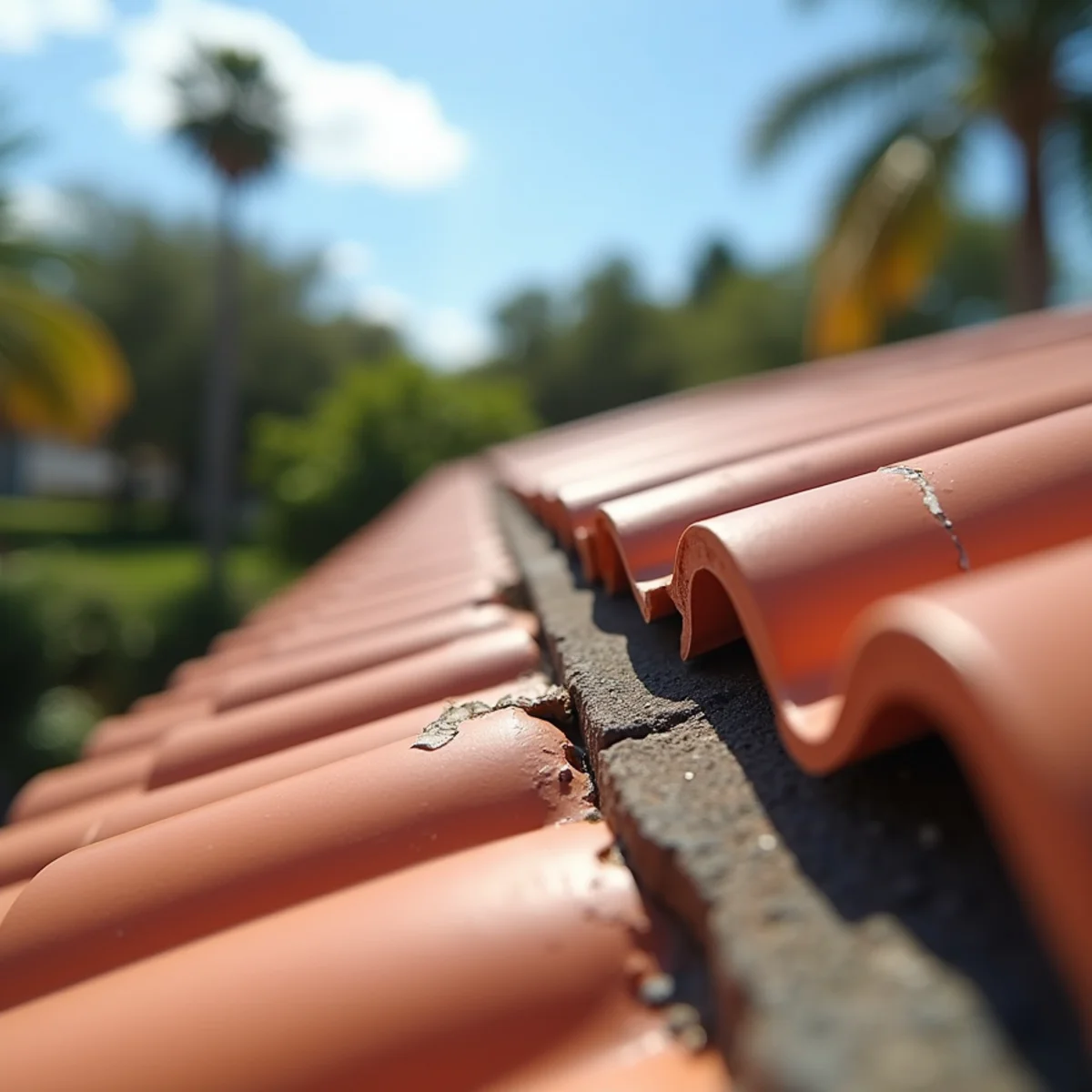
6. Wall and chimney step flashing
Anywhere a roof meets a vertical wall or chimney, step flashing is doing the waterproofing work, not the tile. Sealant at these transitions fails well before the tile does, and storm-driven rain finds gaps that a dry, calm day would never reveal.
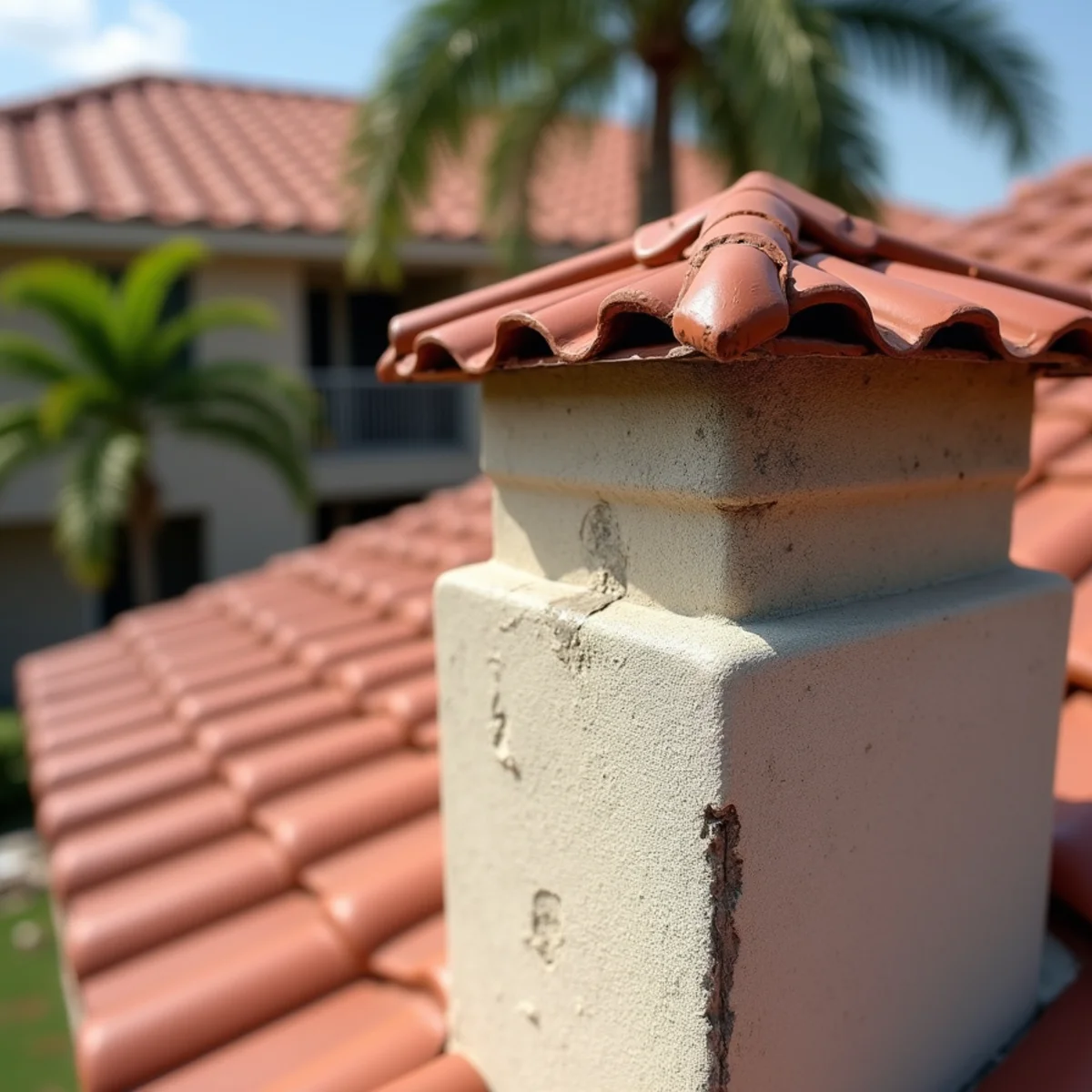
| Failure point | Typical warning sign |
|---|---|
| Cracked/slipped tile | Visible gaps or mismatched tile from the ground |
| Degraded underlayment | Leak with no obviously broken tile nearby |
| Valley debris dam | Staining that follows a diagonal valley line inside the attic |
| Pipe boot failure | Leak concentrated near a bathroom or kitchen wall |
| Ridge/hip failure | Leak near the roof peak after high wind |
| Wall/chimney flashing | Staining on an interior wall below a roof-to-wall intersection |
A drone inspection can spot cracked tile, ridge separation, and valley debris without anyone walking the roof. See free drone roof inspections for how we document tile roofs from the air.
Repair or replace?
A handful of cracked tiles and a section of aged underlayment is usually a straightforward roof leak repair. But if we find widespread underlayment failure across multiple slopes, or tile that is too old and discontinued to source a clean match, a full re-roof is often the more economical long-term answer, since patch repairs on a roof that is failing everywhere at once rarely hold for long.
What we check first, before a single tile comes off
Diagnosing a tile leak correctly matters as much as fixing it, because removing tile unnecessarily creates new risk of breakage on pieces that were never part of the problem. We start in the attic whenever access allows, tracing staining back along rafters and decking to its highest point, since water on tile roofs frequently travels several feet downslope before it finds a gap in the decking and drips. Staining that stops abruptly at a rafter usually points us to a specific course of tile to lift; staining that runs continuously along a valley line usually means debris, not a material failure.
From the roof itself, we do a controlled lift-and-inspect on suspect tile rather than walking the whole slope, checking the underlayment condition, fastener corrosion, and whether adjacent tiles show the same wear pattern that would suggest a section-wide problem rather than an isolated one. A moisture meter on the exposed decking tells us whether water intrusion is recent, from this storm, or has been slowly wicking in for longer than the homeowner realizes. That distinction changes the recommendation: a fresh, isolated leak often gets a targeted repair, while decking that reads wet in multiple spots across a slope usually means the underlayment beneath the whole section needs to come up.
Preventing the same leak from coming back
A repair that only addresses the spot where water is currently visible often misses the actual cause a few feet away. Before we close out any tile leak repair, we walk the surrounding area for the conditions that tend to produce a repeat call within a season or two.
- Clear valleys and gutters of leaf and palm frond debris before the next named storm, especially under oak or ficus canopy
- Re-check ridge and hip mortar annually on tile roofs older than 15 years, since it degrades gradually and rarely fails all at once
- Replace brittle rubber pipe boots proactively rather than waiting for the crack to leak, particularly on roofs original to the home
- Ask for a written note on which tiles were disturbed during any repair, so future work has a record of what was already addressed
Roof age changes which of these six failure points we watch most closely. On a roof under 10 years old, we lean toward debris dams and boot flashing as the likely culprit, since underlayment and mortar rarely fail that early unless installation quality was poor. On a roof past 15 to 20 years, degraded felt underlayment and ridge or hip mortar failure move to the top of the list, simply because those materials have had more heat and UV cycles to break down, even if the tile itself still looks structurally sound from the ground.
Roof shape plays a role too. A hip roof with multiple valleys concentrates far more water flow at each valley than a simple gable roof, so homes with complex rooflines tend to show valley-related leaks sooner, even with the same underlayment age. We factor roof geometry into how aggressively we recommend inspecting valleys on any given home.
We inspect tile roofs across Delray Beach, Coral Springs, and the surrounding communities, and we will tell you honestly whether you are looking at a repair or a tile roof replacement before any work starts. Call (831) 666-1600 for a free drone inspection after your next storm.
Frequently asked questions
Talk to a licensed Boca Raton roofer
Get a free drone inspection and a written estimate from Boca Raton's trusted, licensed roofing team. Same-day response, no pressure.
Keep reading

Emergency Roof Tarping in Palm Beach & Broward: Your Insurance Mitigation Duty Explained
Most Florida homeowners have never heard the term 'mitigation duty' until they need a tarp on their roof. Here is what your policy actually requires, and what a professional tarp job looks like.

What to Do in the First 24 Hours After Hurricane Roof Damage in Boca Raton
The hours right after a hurricane passes decide how smoothly your claim and repair go. Here is the exact order of operations our crews recommend to Boca Raton homeowners the morning after.