
Core Service
Flat Roof Options for South Florida: Modified Bitumen, TPO or Coatings?
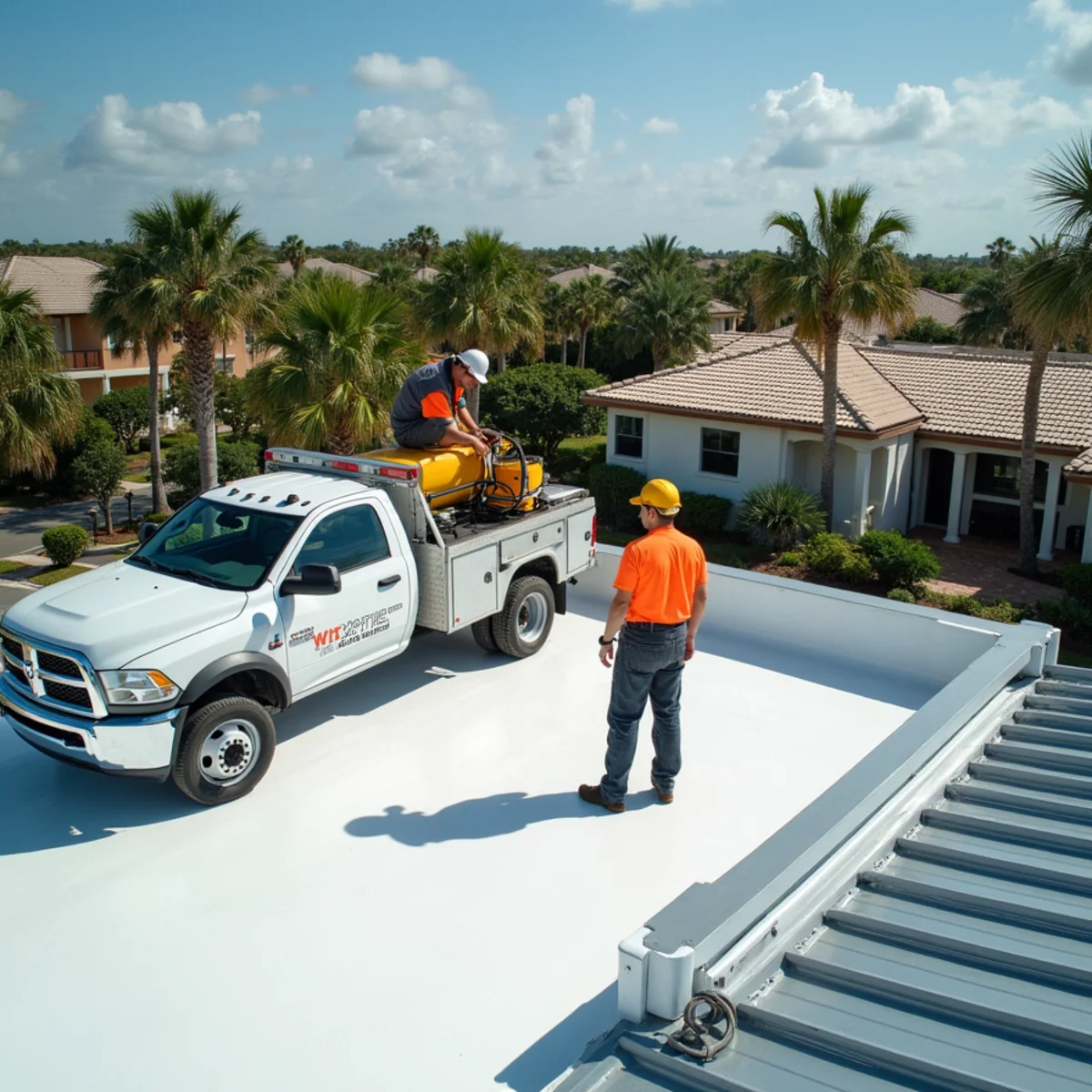
Flat and low-slope roofs in South Florida generally come down to three real choices: modified bitumen, TPO, or a coating system. Here is how they compare for heat, ponding, and cost.
Flat and low-slope sections show up constantly in South Florida — over garages, additions, lanais, and entire mid-century homes with a true flat roof deck. Unlike tile or shingle, a flat roof's performance depends almost entirely on the membrane system and how well ponding water is managed. Here are the three options we install most and how to choose between them.
Modified bitumen: the proven, budget-conscious choice
Modified bitumen is a multi-ply asphalt-based membrane, typically torch-applied or self-adhered, that has decades of track record in Florida's heat and humidity. It handles foot traffic reasonably well and is a familiar, well-understood system for most local roofing crews and inspectors, which can simplify permitting and repairs down the line.
TPO: reflective and increasingly popular
TPO (thermoplastic polyolefin) is a single-ply, heat-welded membrane that is highly reflective in white or light colors, which can meaningfully reduce attic and interior temperatures under a flat section during peak summer heat. It is lighter than modified bitumen and, when properly heat-welded at the seams, offers excellent water resistance. TPO has become the most requested option for both residential additions and commercial roofing projects in our market over the last several years.
Roof coatings: extending life on a sound existing roof
A silicone or acrylic elastomeric coating is not a replacement system on its own — it is a maintenance and life-extension strategy applied over an existing membrane that is still structurally sound but showing UV wear or minor surface cracking. Coatings are reflective, help with minor ponding resistance, and can add several years of service life at a fraction of full replacement cost, but they cannot fix a membrane with failed seams or saturated insulation underneath.
| System | Best for | Installed $/sq ft | Typical lifespan |
|---|---|---|---|
| Modified bitumen | Straightforward replacements, budget-conscious projects | $9–$14 | 15–20 years |
| TPO | Heat reduction, larger commercial or residential sections | $9–$14 | 20–25+ years with proper welds |
| Elastomeric coating | Extending a sound existing membrane's life | $2–$5 | Adds roughly 5–10 years per application |
Not sure whether your flat roof needs full replacement or just a coating? A drone and moisture-scan inspection can usually tell the difference without cutting into the membrane. See free drone roof inspections.
The real enemy of any flat roof: ponding
No membrane, no matter how good, performs well under standing water that never drains. Ponding accelerates UV breakdown, adds structural dead load, and eventually finds any seam weakness. Before choosing a membrane, we evaluate your roof's slope and drainage — sometimes the right fix includes tapered insulation to correct drainage, not just a new top layer.
Choosing between the three
- Full tear-off needed, budget-focused: modified bitumen
- Full tear-off needed, heat/energy focus or larger commercial section: TPO
- Existing membrane still sound, showing UV wear only: elastomeric coating
- Persistent ponding regardless of membrane: address drainage/tapered insulation first
How we decide: tear-off versus coating, in the field
The decision is not really about the membrane's age in years, it is about what a moisture scan and a core sample find underneath the surface. We use infrared or capacitance moisture scanning across the field of the roof to map wet insulation before we ever cut into anything, since a membrane can look fine on top while the insulation beneath is saturated and compressing, which no coating will fix. Where the scan reads dry and the membrane's only issue is UV chalking or minor surface cracking, a coating is a legitimate, cost-effective choice. Where we find wet insulation, blistering, or membrane seams that have separated, a coating would just seal moisture in rather than out, so we recommend tear-off instead, even though it costs more upfront.
We also pull a small core sample in a representative spot on any roof over roughly 12 to 15 years old before quoting, since that single sample tells us the insulation type, how many roofing layers already exist, and whether the deck itself shows any deterioration. Skipping this step is how homeowners and building owners end up with a coating quote for a roof that actually needed a tear-off, discovered only after the coating fails within a year or two.
Parapet walls, drains, and the details that decide whether a flat roof leaks
Most flat roof leaks we diagnose do not originate in the open field of the membrane at all — they start at a transition: a parapet wall cap, a roof drain, a scupper, or an HVAC curb. These details concentrate stress from thermal movement and water flow, and they are where a rushed installation shows up first. A properly detailed parapet includes membrane turned up the wall and terminated under a counter-flashing or coping cap, not simply caulked at the top edge, which fails within a few Florida summers of UV and thermal cycling.
Roof drains and scuppers need to sit at the true low point of the membrane's slope, not just near it, or water backs up against the drain bowl and pools around the one feature meant to remove it. On commercial and larger residential flat sections, we check every penetration and transition individually during inspection, because a membrane rated for 20 years can still leak in year three if a single drain detail was installed wrong.
A maintenance schedule that actually extends a flat roof's life
Flat roofs reward routine attention more than almost any other roof type, because small problems stay small if caught early and become expensive once water finds its way to the insulation layer. We recommend a walk-through at least twice a year, and after any major storm, checking drains and scuppers for debris, inspecting parapet caps and counter-flashing for open seams, and looking for blistering, ponding beyond 48 hours after rain, or any soft spots underfoot that suggest saturated insulation beneath the membrane.
For commercial properties and HOA or condo buildings with a flat or low-slope common roof, we can set up a scheduled inspection plan tied to the building's maintenance calendar rather than relying on someone noticing a leak after it has already reached a tenant's ceiling. This is often the single most cost-effective thing a property manager can do, since a $9 to $14 per square foot membrane replacement is a fraction of the cost of chasing repeat interior water damage from a roof that was never proactively checked.
Keep a simple log of every inspection, including photos of drains and any repairs made, even minor ones. When it eventually comes time to budget for replacement, that history tells us and your board exactly how the roof has aged, rather than starting the conversation from scratch with a single snapshot inspection. A well-documented maintenance history also strengthens any future insurance claim on the membrane, since it shows the roof was actively maintained rather than neglected.
We install and repair flat roofs across Lighthouse Point, Pompano Beach, and the rest of South Florida. Call (831) 666-1600 for an honest assessment of which flat roofing system fits your building and budget.
Frequently asked questions
Talk to a licensed Boca Raton roofer
Get a free drone inspection and a written estimate from Boca Raton's trusted, licensed roofing team. Same-day response, no pressure.
Keep reading
How Long Does a Roof Replacement Take in Palm Beach County? Permits to Final Inspection
The on-roof work is often the shortest part. Here is the real Palm Beach County timeline from signed contract to final inspection — including the permit and tile lead times that catch homeowners off guard.
Tile vs. Metal Roofing for Boca Raton Homes: Wind, Salt Air and Lifespan Compared
Tile and metal are both excellent wind-rated options for Boca Raton, but they perform very differently in salt air and carry different lifespans and price points. Here is an honest side-by-side.