
Core Service
Tile vs. Metal Roofing for Boca Raton Homes: Wind, Salt Air and Lifespan Compared
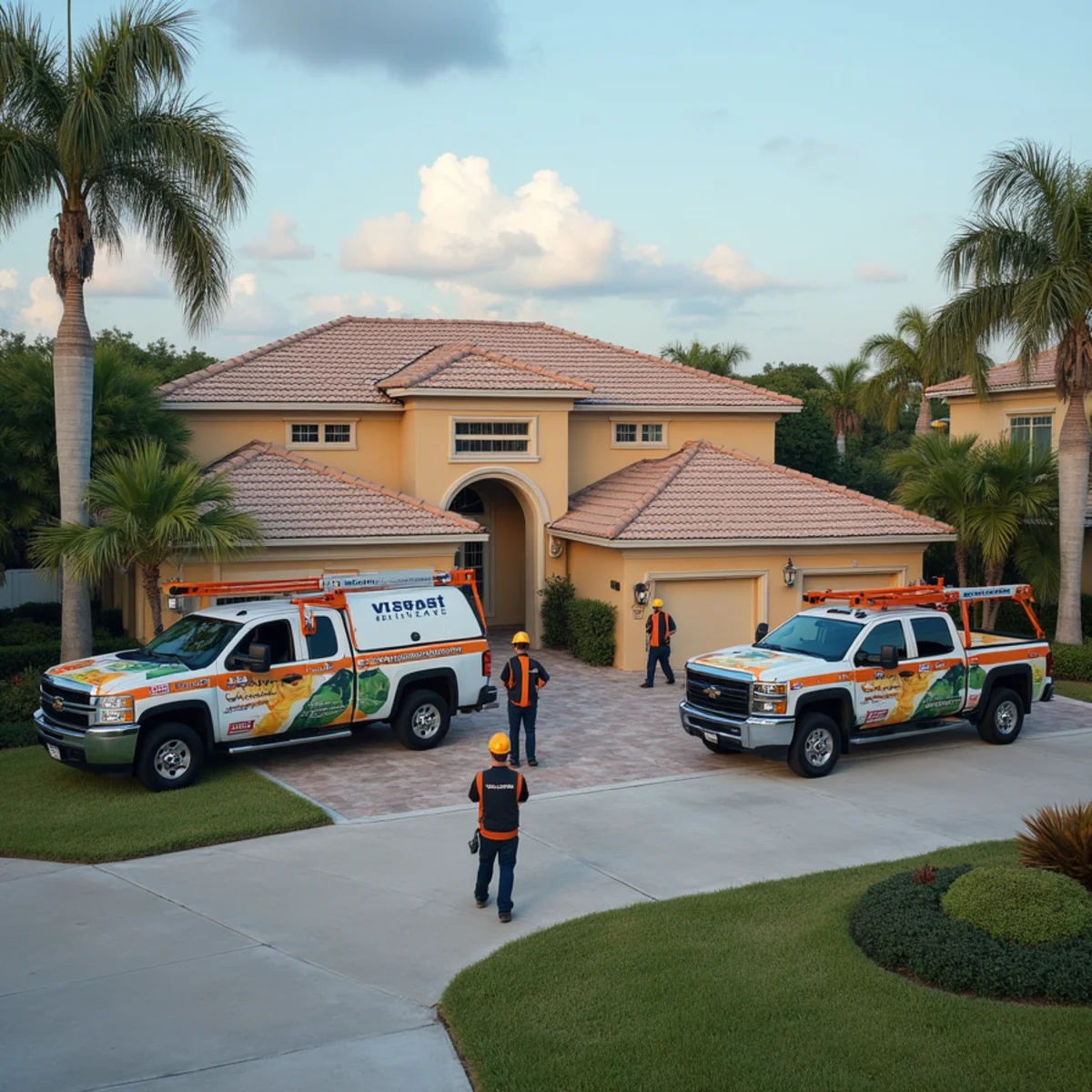
Tile and metal are both excellent wind-rated options for Boca Raton, but they perform very differently in salt air and carry different lifespans and price points. Here is an honest side-by-side.
Tile and metal are the two most common upgrade choices for Boca Raton homeowners moving away from aging shingle roofs, and both are strong performers in a roughly 170 mph design-wind zone. The right choice comes down to how close you are to salt air, what look fits your home, and how you weigh upfront cost against long-term lifespan.
Wind performance
Both systems can meet Florida Building Code wind-uplift requirements when installed correctly with the right fastening pattern and product approval documentation. Concrete and clay tile rely on mechanical fasteners or adhesive foam set at engineered spacing; standing seam metal relies on its continuous panel seams and clip attachment to resist uplift. In practice, individual tile pieces can crack or dislodge from wind-driven debris impact even when the overall system holds, while metal panels are more resistant to impact cracking but can suffer cosmetic denting from large debris.
| Factor | Tile (concrete/clay) | Metal (standing seam/5V) |
|---|---|---|
| Wind rating potential | Excellent with correct fastening | Excellent with correct clip/panel system |
| Salt-air / corrosion resistance | Very good — inert material, but fasteners/flashing need attention | Depends heavily on coating and fastener quality; aluminum performs best near the coast |
| Typical lifespan | 40–50+ years for the tile itself | 30–50 years depending on gauge and coating |
| Installed cost (2,000–2,400 sq ft) | $25,000–$65,000+ | $18,000–$50,000+ |
| Weight | Heavy — requires structure rated for tile load | Light — often suitable for structures not rated for tile |
| Repair after impact | Individual tiles can be replaced | Panel or section replacement, harder to spot-repair invisibly |
Salt air: the real deciding factor near the coast
For homes in Highland Beach or Hillsboro Beach, salt exposure changes the calculation. Tile itself does not corrode, but the fasteners, flashing, and any exposed metal components need to be stainless steel or otherwise corrosion-rated, or they will fail years before the tile does. Metal roofing performs beautifully near the ocean when it is the right metal — aluminum and certain coated steel systems specifically engineered for coastal exposure — but the wrong panel or fastener choice can corrode visibly within a few years. See our coastal and salt-air roofing page for the specific materials we specify east of Federal Highway.
Planning a re-roof specifically for an oceanfront property? Our guide to re-roofing an oceanfront home in Highland Beach or Hillsboro Beach covers material specifications in more depth.
Lifespan and long-term value
Tile generally wins on raw lifespan for the covering itself, often outlasting the underlayment beneath it by decades, which means a tile roof's true replacement cycle is often driven by underlayment failure rather than the tile wearing out. Metal roofing lifespan varies more by product tier — a quality standing seam system with a strong coating warranty can rival tile, while a budget 5V panel with a shorter coating life will not.
Weight and structural considerations
Tile is significantly heavier than metal, which matters most when converting from an existing shingle roof structure that was never engineered for tile load. Switching from shingle to metal is usually straightforward structurally; switching from shingle to tile sometimes requires a structural engineer's review of the truss system first. We check this during our initial inspection so you are not surprised mid-project.
Which should you choose
If you want the classic Mediterranean look common across Boca Raton's established neighborhoods and your structure supports the weight, tile remains an outstanding, long-lived choice. If you want a lighter roof, faster installation, and strong coastal-grade corrosion resistance with the right product, metal roofing is an increasingly popular alternative, especially on additions, flat-adjacent transitions, and modern architectural styles.
Noise, heat, and everyday livability — the questions homeowners actually ask
Cost and code compliance get most of the attention, but the two questions we hear most from homeowners standing in their driveway are simpler: will I hear the rain, and will my attic run hotter. A properly installed metal roof with solid decking and a code-compliant underlayment layer is not noticeably louder inside a conditioned home than tile during a typical rain event; the noise concern mostly applies to open-structure applications like carports or old-style metal-over-batten installs, not a standard residential system over a sealed deck. On heat, unpainted or dark tile absorbs and re-radiates heat into the attic space, while a light-colored or reflective-coated metal roof with proper ventilation often runs measurably cooler at the deck surface, though attic insulation and ventilation matter as much as the roof covering itself.
Maintenance also differs in ways that matter over a 20-year ownership horizon. Tile allows an isolated repair — one cracked piece comes out, one goes in, with no visible patch. Metal panel systems are more forgiving of impact overall, but a damaged panel section on a standing seam roof sometimes requires replacing a full panel run from ridge to eave rather than a small patch, since seams interlock continuously. Neither is objectively better maintenance-wise; it depends on whether you would rather handle frequent small repairs or occasional larger ones.
What we check on your specific home before recommending either
We do not lead with a product preference. During inspection, we look at your existing truss engineering and any available structural documentation to confirm what your roof can carry, the pitch and complexity of your specific roof planes, how close you are to salt spray versus general coastal humidity, and your architectural style, since some HOA design guidelines in Boca Raton's established communities specify tile or restrict visible metal on street-facing elevations. That full combination of factors, not a generic comparison chart, is what actually determines the right recommendation for your specific address.
Resale value is worth a mention too, since it comes up in nearly every consultation. In Boca Raton's established, tile-dominant neighborhoods, a tile roof rarely raises eyebrows with a buyer or their inspector, while a well-installed standing seam metal roof increasingly reads as a premium upgrade rather than an unusual choice, particularly among buyers who know metal's wind and longevity performance. Neither choice hurts resale when installed correctly with full documentation; the bigger resale risk is an aging roof of either material with no permit history or product-approval paperwork to show a buyer's insurer.
Insurance underwriting is the other practical factor buyers and sellers both ask about. Some carriers scrutinize roof age and material more closely than others at the time of a sale, and a documented, permitted roof with current wind-mitigation credits generally moves through underwriting faster than an undocumented one, regardless of whether the covering is tile or metal. We provide complete permit and product-approval paperwork with every installation specifically so it is ready whenever a future sale, refinance, or policy renewal requires it, which spares the homeowner a scramble later.
We install and maintain both tile roofing and metal systems across Boca Raton, Highland Beach, and Hillsboro Beach. Call (831) 666-1600 for a free drone inspection and an honest recommendation based on your home's structure and location.
Frequently asked questions
Talk to a licensed Boca Raton roofer
Get a free drone inspection and a written estimate from Boca Raton's trusted, licensed roofing team. Same-day response, no pressure.
Keep reading
How Long Does a Roof Replacement Take in Palm Beach County? Permits to Final Inspection
The on-roof work is often the shortest part. Here is the real Palm Beach County timeline from signed contract to final inspection — including the permit and tile lead times that catch homeowners off guard.
Flat Roof Options for South Florida: Modified Bitumen, TPO or Coatings?
Flat and low-slope roofs in South Florida generally come down to three real choices: modified bitumen, TPO, or a coating system. Here is how they compare for heat, ponding, and cost.