
Core Service
How Long Does a Roof Replacement Take in Palm Beach County? Permits to Final Inspection
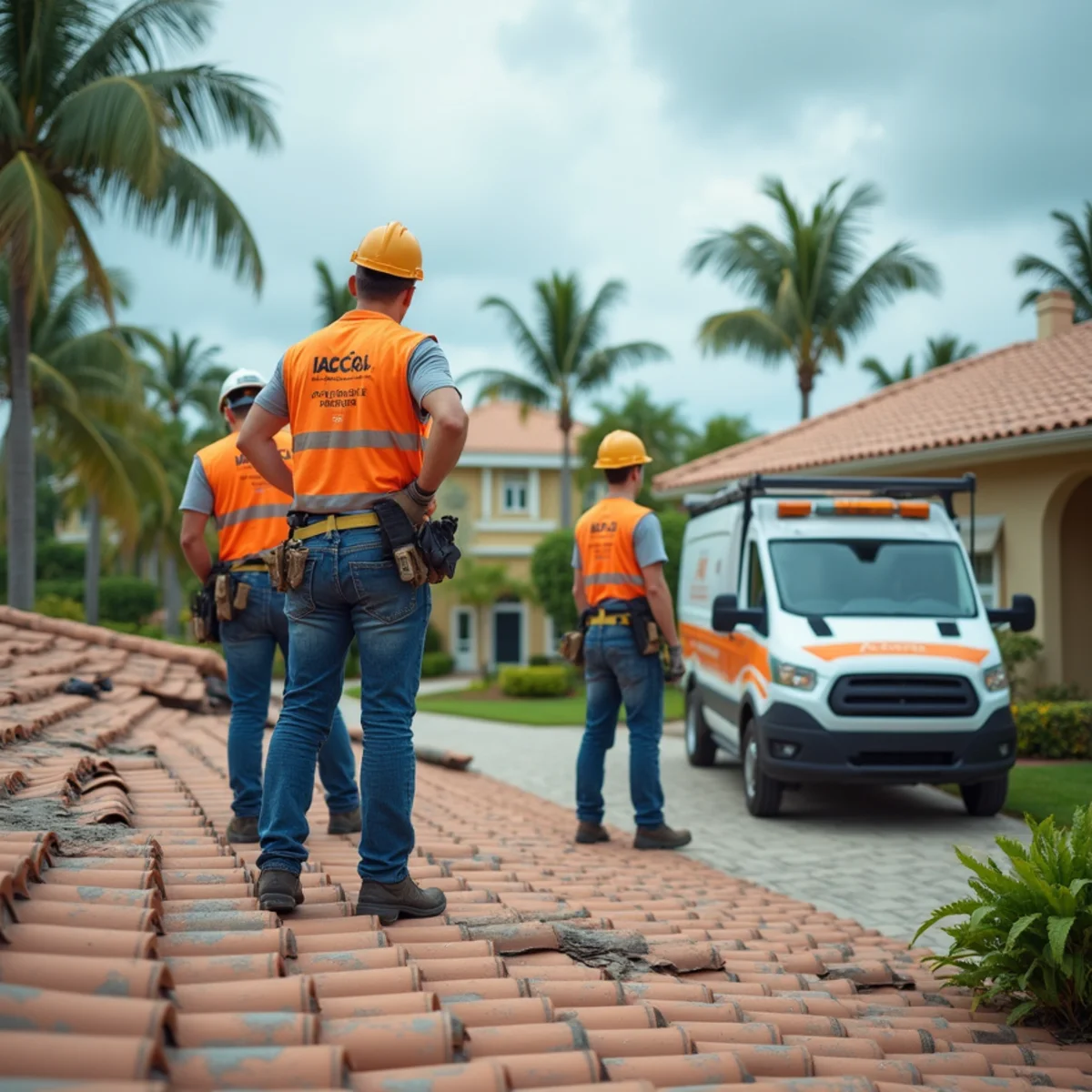
The on-roof work is often the shortest part. Here is the real Palm Beach County timeline from signed contract to final inspection — including the permit and tile lead times that catch homeowners off guard.
Homeowners almost always ask the same first question: how long will my roof take? The honest answer is that the days our crew spends on your roof are usually the shortest stretch of the whole project. Permitting, material lead times, and inspections drive the calendar far more than the install itself.
The realistic start-to-finish timeline
For a typical single-family home in Palm Beach County, plan on three to eight weeks from signed contract to final inspection for shingle or metal, and longer when tile is involved.
| Phase | Typical duration |
|---|---|
| Inspection, scope & contract | 2–5 days |
| Permit application & approval | 1–3 weeks |
| Material ordering & delivery | 3 days (shingle) to 8+ weeks (some tile) |
| Tear-off & install | 3–10 working days |
| Final inspection | 3–10 days after completion |
Why tile stretches the schedule
Concrete and clay tile can carry long lead times, especially for specific profiles and colors. If you are set on tile roofing, order early — we can dry-in your roof and keep it watertight while tile is on the way.
Planning around hurricane season? Read our pre-hurricane season roof checklist and schedule before the June 1 rush.
What actually happens during inspection, scope, and contract
The first phase looks quick on the table above, but it sets the accuracy of everything that follows. We start with a free drone inspection and photo report, measure every roof plane, check the decking condition as far as a visual and moisture-meter inspection can tell without removing tile, and confirm your municipality and the specific code cycle your permit will fall under. We write a scope that separates tear-off, underlayment, decking allowance, covering material, flashing, and permit costs into individual line items before you sign anything, because a vague contract is the single biggest cause of disputes and delays once work is underway.
If your project is storm-related, this is also when we coordinate with your insurance documentation, since a scope built for a permit application and a scope built for a claim need to agree with each other. We would rather spend an extra day getting the paperwork aligned before the permit is submitted than have a municipal reviewer or your adjuster kick it back for a mismatch weeks later.
Permitting in Palm Beach County: what actually eats the time
Palm Beach County is not in the High-Velocity Hurricane Zone, unlike Broward and Miami-Dade, so permit review here does not require the same HVHZ-specific NOA documentation. That said, every re-roof permit still requires engineered wind-uplift calculations appropriate to your home's exposure category and the roughly 170 mph design-wind reference for this area, along with Florida Product Approval documentation for the specific tile, shingle, or metal system you are installing. Boca Raton's building department, and the separate departments for unincorporated Palm Beach County and neighboring municipalities, each run their own review queue, so the same project can take different amounts of time depending on which office has jurisdiction and how busy that office is after a regional storm event.
We submit permits with complete documentation the first time whenever possible, since an incomplete submission restarts the review clock rather than simply pausing it. A well-prepared permit package with correct wind-uplift engineering and product-approval numbers attached is the single biggest lever we control to keep this phase closer to one week than three.
Tear-off and install: what a realistic workday looks like
Florida Building Code generally requires a roof to be dried-in, meaning watertight, by the end of each working day once tear-off begins, which shapes how we sequence a job. On a typical single-family roof, we work section by section rather than stripping the entire roof to bare deck at once, so an unexpected afternoon shower does not put the whole structure at risk. Crew size and roof complexity determine daily pace far more than roof size alone — a straightforward gable roof with few penetrations moves faster per square than a roof with multiple valleys, dormers, and skylights.
We run a magnetic nail sweep at the end of every single day, not just at project completion, since loose fasteners in the yard or driveway are both a safety hazard and one of the most common homeowner complaints about roofing crews. Expect noise and vibration throughout the tear-off days in particular; it is the least pleasant part of the project for anyone working from home, but it is also usually the shortest phase on the calendar.
Weather delays and scheduling around hurricane season
Scheduling a re-roof during June through November means building in more flexibility, not necessarily more total time. Daily summer thunderstorms are normal and we plan around them by dry-in sequencing described above, but a named storm approaching the coast can pause an active job entirely while we secure the site, and material deliveries — especially tile — can be delayed regionally when a storm disrupts shipping. If your roof is already compromised and you are weighing whether to wait until after hurricane season to start a planned replacement, that is a conversation worth having with us directly, since an aging or already-damaged roof sometimes represents more risk sitting through one more season than the disruption of an active project.
Outside of storm season, the biggest schedule variable is simply contractor and material demand. Spring, when many homeowners plan pre-hurricane-season upgrades, tends to book up faster than late fall.
What can speed up — or slow down — your specific timeline
- A complete, accurate permit submission on the first attempt — incomplete packages restart the review clock
- Choosing an in-stock shingle or metal profile versus a specialty tile profile with a long factory lead time
- Decking condition found at tear-off — extensive unexpected rot adds days, not weeks, but does add time
- Scheduling outside the peak spring pre-hurricane-season rush when contractor and permit-office demand are both lower
- Active named storms in the forecast, which can pause work regardless of how well the rest of the project is planned
Most of these factors are within your control once you know to ask about them upfront. Choosing an in-stock material, getting your permit package right the first time, and scheduling before the spring rush do more to shorten your timeline than anything that happens once tear-off actually begins.
One more variable homeowners rarely think to ask about: your contractor's own crew scheduling. A contractor juggling too many simultaneous projects can leave a permitted, material-ready job sitting for days waiting on labor. We schedule crews to a specific project before ordering final materials, specifically so a ready roof is not left waiting once everything else is in place.
Getting started in Boca Raton and beyond
We handle full roof replacements across Palm Beach County, including Delray Beach and Boca Raton, and our free drone inspection is the fastest way to get an accurate, written timeline rather than a rough guess. Call (831) 666-1600 for a free drone inspection and a written timeline for your specific roof.
Frequently asked questions
Talk to a licensed Boca Raton roofer
Get a free drone inspection and a written estimate from Boca Raton's trusted, licensed roofing team. Same-day response, no pressure.
Keep reading
Flat Roof Options for South Florida: Modified Bitumen, TPO or Coatings?
Flat and low-slope roofs in South Florida generally come down to three real choices: modified bitumen, TPO, or a coating system. Here is how they compare for heat, ponding, and cost.
Tile vs. Metal Roofing for Boca Raton Homes: Wind, Salt Air and Lifespan Compared
Tile and metal are both excellent wind-rated options for Boca Raton, but they perform very differently in salt air and carry different lifespans and price points. Here is an honest side-by-side.