
Core Service
Sizing Gutters for South Florida Downpours: Seamless Aluminum vs. Copper
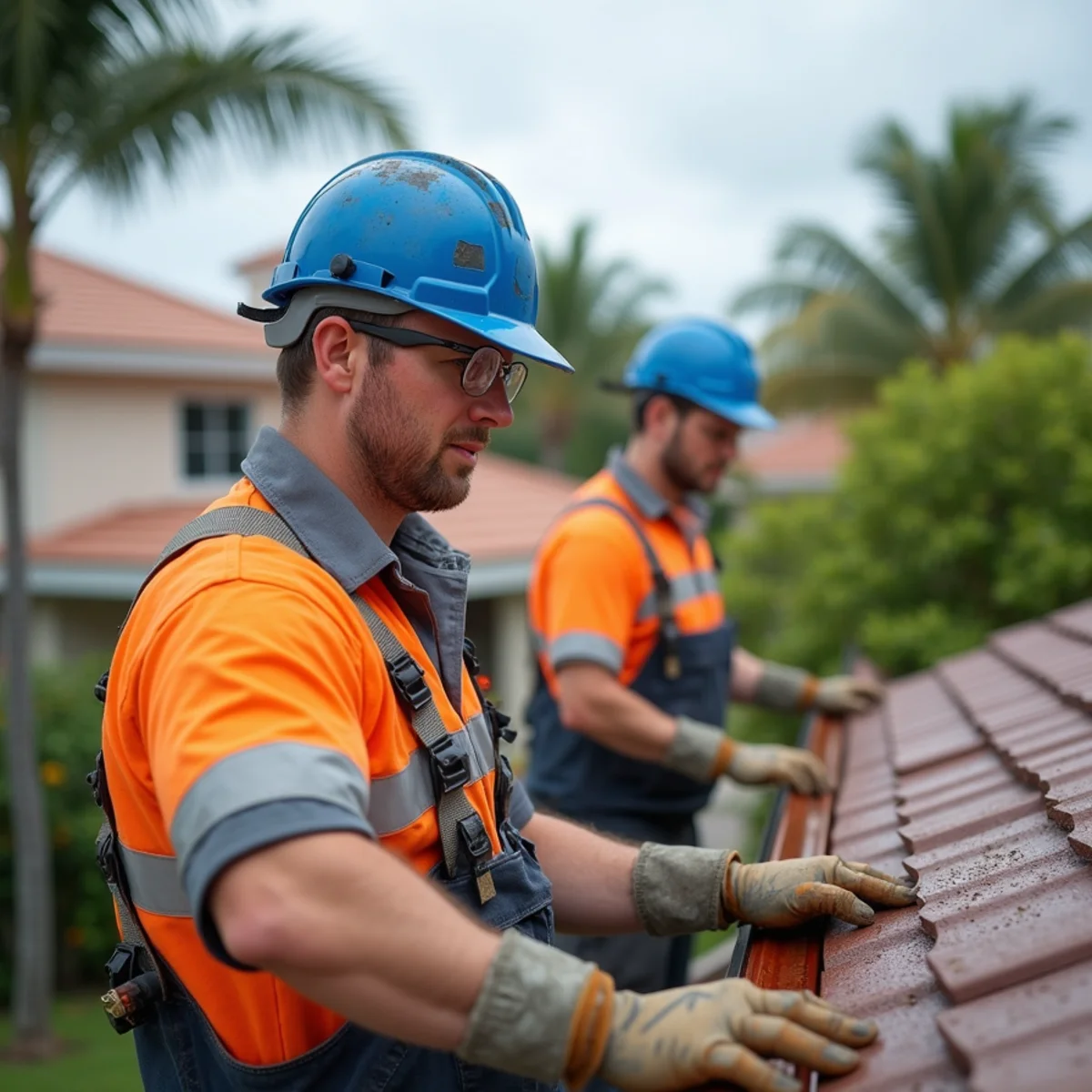
A summer downpour in South Florida can dump two to four inches of rain in under an hour. Gutters sized for a drier climate simply cannot keep up — here is how to size them right.
A typical South Florida summer storm cell does not sprinkle. It parks over a neighborhood and drops two to four inches of rain in under an hour, then moves on. Gutters that were adequate in a drier climate, or gutters sized off a generic online chart, overflow at the fascia, dump water against the foundation, and eventually pull loose from the rot they cause. Sizing gutters for our rainfall intensity, not just our roof area, is the difference between a system that disappears into the background and one you are re-hanging every few years.
How much water your gutters actually have to move
Gutter capacity is a function of roof area, pitch, and local rainfall intensity. South Florida's design rainfall rate runs well above the national average used in most manufacturer sizing charts, so a 5-inch K-style gutter that comfortably handles a 1,500 sq ft roof section in a drier state can overflow here on the same footprint during a downpour. We size gutters off the actual drainage area of each roof plane, factoring in valleys that concentrate water into a single run.
| Roof drainage area (per run) | Recommended gutter size | Downspout guidance |
|---|---|---|
| Up to 1,000 sq ft | 5-inch K-style | 2x3 in., one per 35–40 ft of run |
| 1,000–2,000 sq ft | 5-inch K-style, tighter spacing | 3x4 in., one per 30–35 ft of run |
| 2,000+ sq ft or valley-fed runs | 6-inch K-style | 3x4 in. or larger, added downspouts at valleys |
Valleys are the detail most DIY sizing misses. A single valley can double or triple the flow hitting one stretch of gutter, which is why we often add an extra downspout right below a valley instead of relying on the nearest corner.
5-inch K-style vs. 6-inch: when bigger is worth the upcharge
- 5-inch gutters handle most single-story homes and roof sections under roughly 1,500–2,000 sq ft of drainage area without issue.
- 6-inch gutters carry close to double the water volume of a 5-inch run and make sense on larger roofs, homes with long unbroken rooflines, or any section fed by multiple valleys.
- Two-story homes benefit from 6-inch gutters on the lower roof planes that catch runoff cascading down from the upper roof.
- Oversizing costs more up front but almost always costs less than the fascia and soffit repairs that come from chronic overflow.
Seamless aluminum vs. copper: what actually differs
Both materials are formed on site from a coil, so the gutter itself has no seams along its length except at corners and end caps — that is what "seamless" means, and it is the main reason seamless gutters outlast sectional big-box gutters in our climate.
- Seamless aluminum is the standard choice for most South Florida homes: baked-on enamel finish in a wide color range, resists corrosion well when properly coated, and costs a fraction of copper installed. Expect a service life in the 20–25 year range with routine cleaning.
- Copper costs significantly more per linear foot but can last 50 years or longer, develops a patina rather than corroding, and is the traditional choice on historic and high-end coastal homes where the look and longevity justify the investment.
- Near the ocean, copper's natural corrosion resistance is a genuine advantage over painted aluminum, which can eventually show pinholing at scratches if the coating is compromised.
Where copper earns its premium
We recommend copper most often on historic homes where the material is period-appropriate, and on oceanfront properties where salt exposure shortens the practical life of painted aluminum. For a full breakdown of what changes materially within a few blocks of the water, see our salt-air roofing material guide.
Parkland, Coconut Creek, and drainage on canal and zero-lot-line homes
Homes in Parkland along the canal-front lots near Heron Bay and Parkland Golf & Country Club move a lot of roof water toward rear yards that back up to water — downspouts there need to discharge away from seawalls and bulkheads, not straight down into them. In Coconut Creek, tighter zero-lot-line spacing between homes means downspout placement has to account for the narrow side yards that double as the only drainage path to the street or swale. We walk every property before quoting a gutter job specifically to plan discharge points, not just gutter length.
Ready for gutters sized for real South Florida rainfall? Our seamless gutter installation team measures every roof plane and valley before quoting. Call (831) 666-1600 for a free estimate.
Gutter guards, hurricane strapping, and maintenance
Mature oak and ficus canopy across Palm Beach and Broward Counties means leaf and seed-pod debris is a year-round issue, not just an autumn one. Guards reduce clogging but do not eliminate the need for a seasonal check, especially before storm season when a clogged downspout turns a heavy rain event into water backing up under the roof edge. Gutters also need to be properly fastened and, on exposed runs, strapped so wind does not peel them off the fascia during a tropical system — a detail worth confirming as part of our pre-hurricane season roof checklist.
What a licensed roofer checks before quoting fascia-mounted gutters
Sizing is only half the job. Before we quote a gutter run, we check the fascia board itself for soft spots or existing rot, since hanging a new gutter system on a compromised fascia just relocates the problem instead of solving it. We also confirm the roof edge has proper drip edge flashing feeding into the gutter line — without it, wind-driven rain can get behind the gutter entirely, no matter how well the gutter itself is sized. When fascia damage turns up, we flag it before installation rather than fastening a new system into wood that will not hold screws for long, and on runs where the damage is extensive, that conversation sometimes leads into a broader roof replacement scope at the eave rather than a standalone gutter swap.
Fastening detail matters as much as material choice. We hang gutters on hidden hangers spaced roughly every 24 to 30 inches rather than the wider spacing some lower-cost installs use, and on long runs over about 40 feet we build in expansion joints so thermal movement does not stress the seams at the corners. Hangers go into solid framing behind the fascia, not just the fascia board itself, which is the detail that keeps a gutter system attached during a tropical storm's sustained wind rather than peeling off in a single gust.
On oceanfront and near-coastal properties, we also factor salt exposure into the hardware spec itself, not just the gutter finish. For homes closer to the water where corrosion resistance matters most across the whole roof system, this is the same reasoning that drives material choices on our coastal roofing projects, and it is worth applying the same standard to gutter hardware even when the gutters themselves are standard aluminum.
Gutters are a small line item next to a full roof, but an undersized or poorly fastened system undermines fascia, soffit, and even the roof deck edge over time. If your current gutters overflow during a normal afternoon storm, that is a sizing problem worth fixing before it becomes a wood-rot problem.
Frequently asked questions
Talk to a licensed Boca Raton roofer
Get a free drone inspection and a written estimate from Boca Raton's trusted, licensed roofing team. Same-day response, no pressure.
Keep reading

How Long Does a Roof Replacement Take in Palm Beach County? Permits to Final Inspection
The on-roof work is often the shortest part. Here is the real Palm Beach County timeline from signed contract to final inspection — including the permit and tile lead times that catch homeowners off guard.
Flat Roof Options for South Florida: Modified Bitumen, TPO or Coatings?
Flat and low-slope roofs in South Florida generally come down to three real choices: modified bitumen, TPO, or a coating system. Here is how they compare for heat, ponding, and cost.