
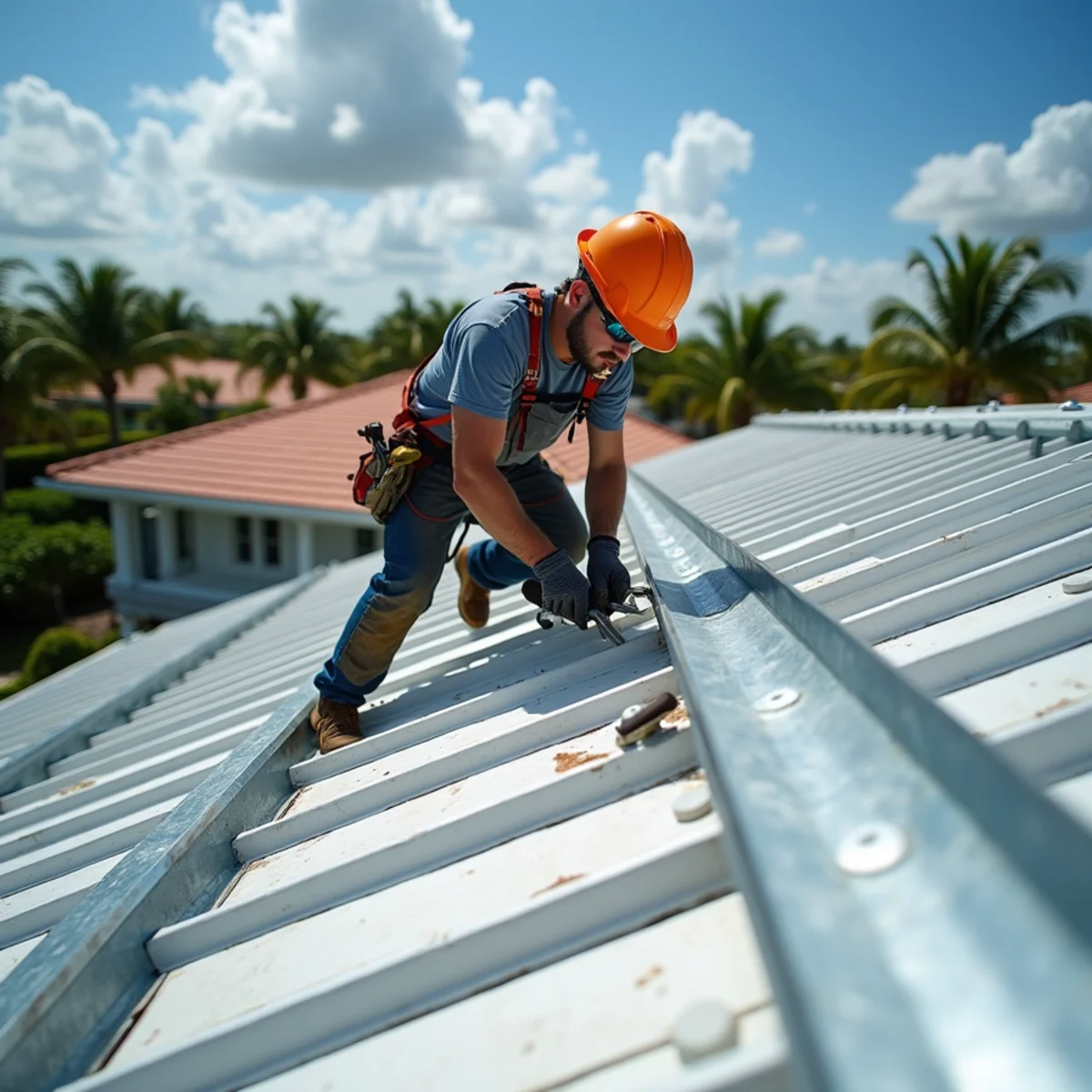
In Palm Beach County, where the code references roughly a 170 mph ultimate design wind speed with Exposure C common near the coast, how your roof is attached matters as much as what it is made of. Wind mitigation is the set of upgrades that keep the roof on the walls and the water out of the house when a hurricane hits, and the same features earn credits that can meaningfully lower your insurance premium. We install and document them so you get both the protection and the paperwork.
As a Florida state-certified, insured roofing contractor based on N Federal Highway, we build these features into every re-roof and can retrofit several of them on an existing roof. Just as important, we complete them in a way a licensed inspector can verify on the wind-mitigation form your carrier reads. Call (831) 666-1600 and we will show you which upgrades your roof already has and which ones would pay you back.
Signs you need wind mitigation in Boca Raton
Premiums climbing with no credits on file
Many older Boca roofs already have some mitigation features, but no documented wind-mitigation inspection ever recorded them. Owners pay full premium for protection they already own.
Toe-nailed rafters and weak roof-to-wall connections
Homes built before modern code often connect the roof to the walls with nails alone. Clips and single or double wraps hold far better under uplift, and they are one of the biggest credit line items on the form.
No secondary water barrier
When wind lifts the covering, the underlayment is all that stands between the storm and your ceilings. A sealed roof deck or secondary water barrier keeps the house dry even if tiles or shingles are lost.
Under-nailed decking
Sheathing fastened with too few or too small nails pulls loose in high wind. Re-nailing the deck to current spacing improves both the uplift rating and the mitigation credit.
Our process
- 1
Assessment and free drone review
We fly the roof, review the attic and roof-to-wall connections where accessible, and identify which mitigation features exist and which are missing or under-spec.
- 2
Upgrade plan with credit outlook
We lay out which upgrades apply to your roof, how each maps to the wind-mitigation form, and where My Safe Florida Home funding might offset the cost.
- 3
Deck and connection work
During a re-roof we re-nail the decking to code, add or upgrade roof-to-wall straps and clips where the structure allows, and seal the deck for a secondary water barrier.
- 4
Code-approved system install
We finish with a self-adhered or product-approved underlayment, proper flashing, and a wind-rated covering, all installed to the 2023 Florida Building Code.
- 5
Documentation for your insurer
We provide the completed-work records and photos your wind-mitigation inspector and carrier need, so the credits actually land on your policy.
The features that earn wind-mitigation credits
Insurers give credits for specific, verifiable features, and a licensed inspector records them on a standardized wind-mitigation form. The heavy hitters are the roof covering's compliance with modern product approval, the roof deck attachment (nail size and spacing), the roof-to-wall connection (toe nails, clips, single wraps, or double wraps), the roof geometry, and the presence of a secondary water barrier. Not every feature is a roofing job, but the ones that are tend to carry the largest credits, which is why a re-roof is the natural time to capture them.
We explain, in plain terms, which line items your roof can improve and roughly what each is worth before you spend a dollar. Our post on the roof features that lower Florida insurance premiums breaks down each item on the form so you know what an inspector is looking for.
My Safe Florida Home and stacking your savings
The state's My Safe Florida Home program offers grants, commonly up to around $10,000 on a matching basis, for wind-mitigation upgrades like a secondary water barrier, roof-to-wall straps, and a sealed roof deck. Used well, a grant can cover a large share of the upgrade cost, and the completed work then keeps paying you back through lower premiums year after year. We help homeowners understand eligibility and line up the work so it qualifies, and our guide to My Safe Florida Home roof grants covers how the program and the roof upgrades fit together.
Mitigation also protects your ability to stay insured at all. Carriers and Citizens increasingly require proof of remaining roof life and sound attachment before they will write or renew, so a documented, well-attached roof is as much about insurability as it is about the premium.
Where mitigation meets a full replacement
The most cost-effective moment for most of these upgrades is during a roof replacement, when the covering is already off and the deck and connections are exposed. That is when re-nailing the deck, sealing it, and improving roof-to-wall straps costs the least and delivers the most. If you are also on the coast, pairing mitigation with the corrosion planning on our coastal and salt-air roofing page gives you a roof that resists both the wind and the salt. And when the paperwork side comes due, our insurance claim support keeps your documentation working for you.
Wind Mitigation across Palm Beach & Broward County
Wind-mitigation upgrades pay off across Palm Beach and Broward County, and we install and document them throughout both. We retrofit roof-to-wall straps, seal decks, and re-nail sheathing on homes in Delray Beach, Boynton Beach, and Wellington, then south into Deerfield Beach, Pompano Beach, and Coral Springs. Every job ends with the completed-work records a licensed inspector needs to put the credits on your policy.
The mitigation features are the same on both sides of the Hillsboro Canal, but the product paperwork is not. In Boca and the rest of Palm Beach County we document with Florida Product Approval, while homes in Broward's High-Velocity Hurricane Zone need HVHZ-approved products and Miami-Dade NOA. My Safe Florida Home grants follow the homeowner, not the county, so a Delray Beach or a Pompano Beach owner can stack the same secondary water barrier and roof-to-wall credits against a state match. We line the work up so it qualifies wherever you are.
What affects your price
Wind-mitigation work is priced from what your roof already has and what your structure will accept, but planning ranges and available grants help you weigh cost against long-term premium savings.
- Existing features
- If your roof already has clips or a sealed deck, the upgrade may be small; we credit what exists rather than charge for redundant work.
- Roof-to-wall retrofit access
- Adding straps or clips is easier when the truss connections are reachable; blocked or finished areas add labor.
- Secondary water barrier
- Sealing the deck is most cost-effective during a re-roof, when the covering is already off; standalone retrofits are more limited.
- Deck re-nailing
- Bringing sheathing fastening to current spacing is a per-square labor item and is typically done at tear-off.
- My Safe Florida Home grants
- The state program commonly offers up to about $10,000, typically on a matching structure, for qualifying upgrades, which can substantially reduce your out-of-pocket cost.
These are honest planning ranges, not a quote. Your written scope confirms the real price after a free inspection. Call (831) 666-1600.
Why choose Mighty Dog Roofing for wind mitigation
- We build mitigation features into every re-roof, not as an add-on afterthought
- Clear explanation of how each upgrade maps to the wind-mitigation form
- Guidance on My Safe Florida Home eligibility and the matching-grant structure
- Completed-work documentation your inspector and carrier will accept
- Free drone review to credit the features your roof already has
- Installed to the 2023 Florida Building Code with product-approved components